
KIMO International, in a strategic partnership with HELCOM (Baltic Marine Environment Protection Commission) and the Swedish Agency for Marine and Water Management, has launched a new awareness campaign aimed at reducing marine litter from one of its most significant sources: abandoned, lost, or otherwise discarded fishing gear (ALDFG).
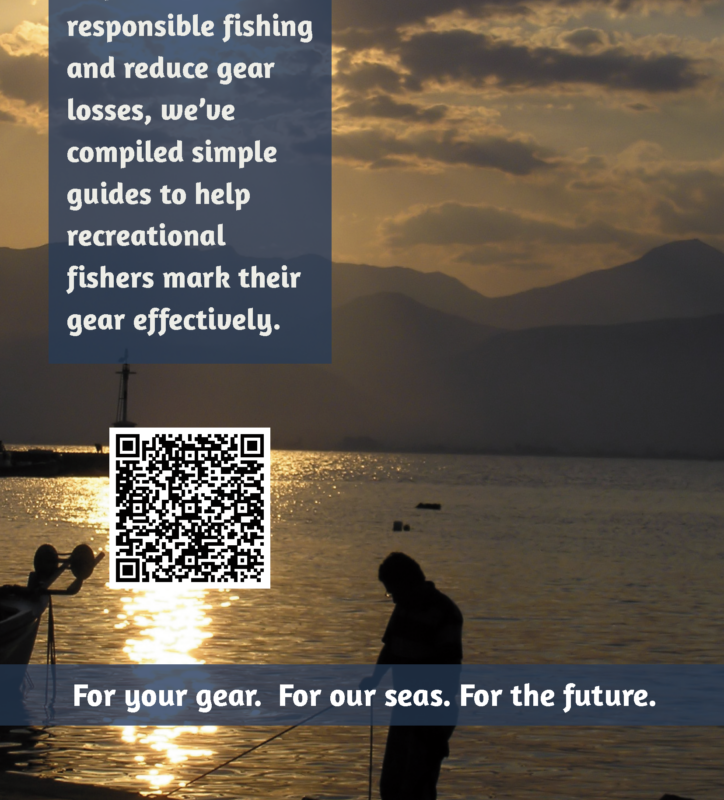
Nobody wants to lose their fishing gear. It’s expensive, frustrating, and harmful to the marine environment we all cherish
The campaign provides clear, practical guidance for recreational fishers across the Baltic Sea region. The initiative comes in response to alarming data highlighting the scale of the problem. A 2023 study by the Swedish Environmental Research Institute estimated that in HELCOM countries alone, recreational fishers lose a staggering 21 million baits, 9 million sinkers, and 96 million metres of fishing line every year.
“Nobody wants to lose their fishing gear. It’s expensive, frustrating, and harmful to the marine environment we all cherish,” said KIMO President, Preben Friis-Hauge. “This campaign builds on the excellent research being done by HELCOM and empowers anglers, pot fishers, and gillnet fishers with simple, effective marking techniques to prevent loss, identify ownership, and recover equipment before it becomes deadly marine litter.”
Simple Solutions for a Lasting Impact
Lost gear does not just disappear; it continues to trap fish, birds, and marine mammals—a phenomenon known as “ghost fishing.” Proper marking is one of the most direct and effective ways to combat this. By ensuring that traps, pots and gillnets are clearly labelled, fishers can help authorities and other users return misplaced gear, reducing both environmental harm and economic waste. Although marking helps in the recovery of gear once it is lost, the campaign also focuses on preventing gear loss by sharing best practices to reduce gear loss in the first place.
The campaign breaks down best practices into three targeted categories:
- Anglers
- Trap and pot fishers
- Gillnet fishers
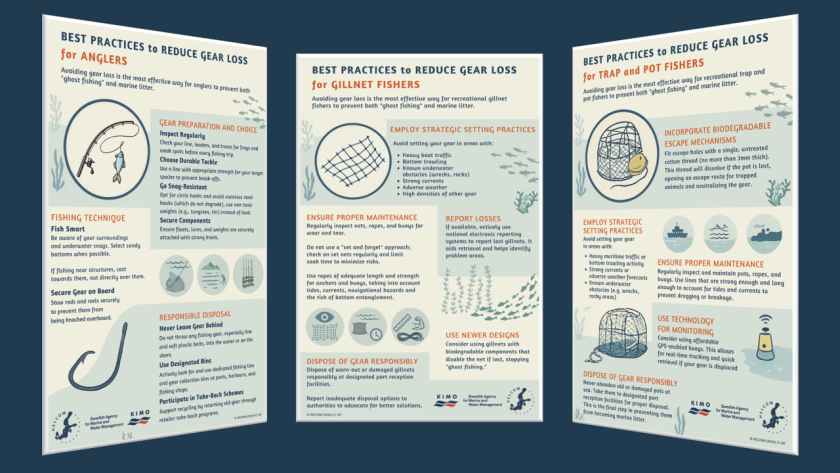
To make these guidelines as accessible as possible, the partnership has created a full suite of free, ready-to-use campaign materials. These include downloadable one-pagers, infographics perfect for social media, print-ready posters, and short instructional videos. KIMO encourages local authorities, fishing clubs, and environmental groups to distribute these resources widely. The materials are free to use, and translations are welcomed by contacting HELCOM.
A Collaborative Push for a Cleaner Baltic
This campaign underscores the power of regional cooperation. By combining HELCOM’s scientific and policy expertise, the Swedish Agency for Marine and Water Management’s national regulatory support, and KIMO International’s network of local authorities, the initiative is poised to reach thousands of recreational fishers across the Baltic coastline.
“Reducing marine litter requires all of us to change habits,” KIMO President, Preben Friis-Hauge added. “We invite every recreational fisher in the Baltic to visit the campaign page, watch the videos, and start marking their gear today. A small change in practice can make a massive difference for the health of our sea.”