
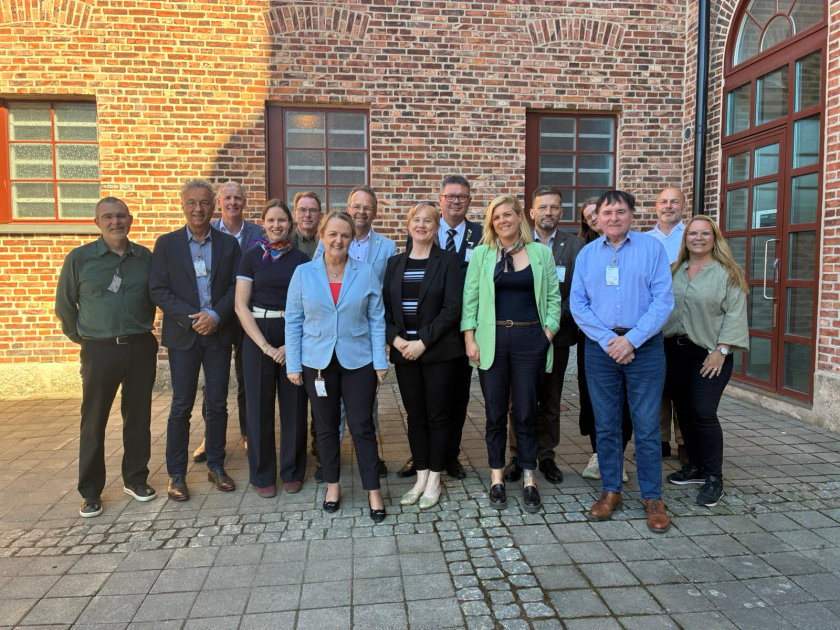
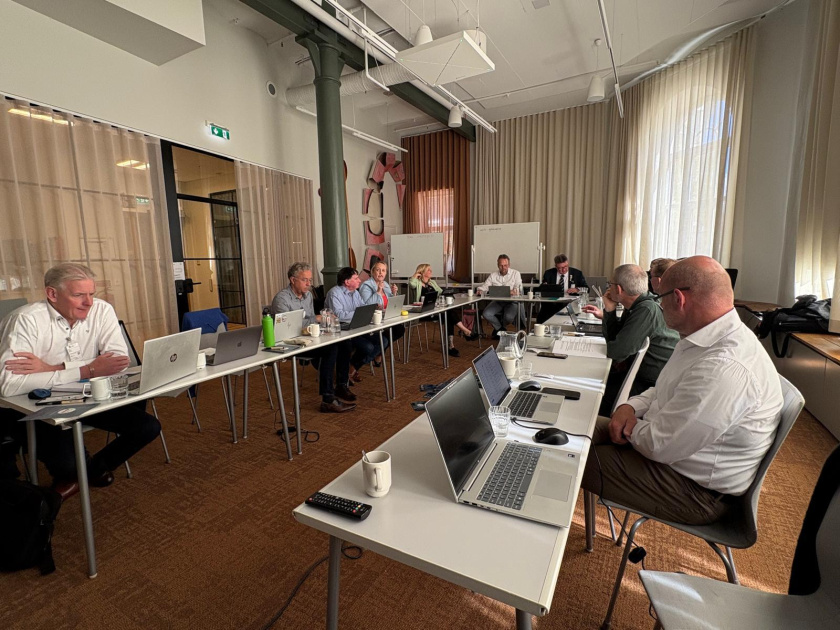
Gothenburg, Sweden – On 7 May 2026, the KIMO International Board convened in Gothenburg for a pivotal meeting hosted by Gothenburg Municipality. The gathering marked an important milestone for the organisation, combining high-level strategic decision-making with hands-on learning about innovative solutions to marine plastic pollution.
The centrepiece of the formal agenda was the Board’s unanimous approval of the KIMO International Annual Report 2025. The report chronicles a landmark year for the network, including the successful transition of the International Secretariat from Shetland Islands Council (UK) to Aalborg Municipality (Denmark), the adoption of the new KIMO Strategy 2026–2030, and major policy victories such as the world’s first regional ban on scrubber water discharges at the OSPAR Ministerial Meeting in Vigo. The 2025 report also shines a spotlight on KIMO’s growing work on PFAS “forever chemicals” and includes comprehensive updates from all national networks.New resolution on microplastics
Looking ahead to the October 2026 Assembly of Delegates, the Board discussed a new draft resolution on microplastics. Once finalised, the resolution will call for stronger international measures to address microplastic pollution at source – from tyre wear, textile fibres, and other diffuse land-based sources. The proposal reflects KIMO’s commitment under its 2026–2030 strategy to tackle chemical pollution and marine litter with targeted, evidence-based advocacy.
Ghost gear and ALDFG workshops
The meeting also featured two deep-dive workshops on abandoned, lost, or otherwise discarded fishing gear (ALDFG) – a longstanding priority for KIMO.
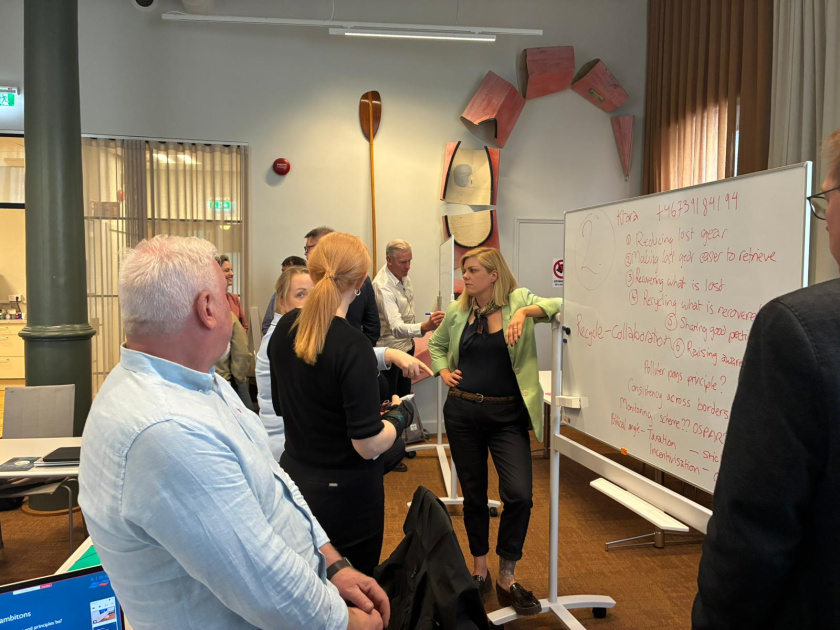
First, a Ghost Gear working group under KIMO Sweden facilitated an engaging session on the scale of the problem and the urgent need for prevention, marking, and retrieval schemes. The workshop generated lively discussion about what concrete actions KIMO could take collectively to support municipalities and fishers.
Building on that momentum, the International Secretariat led a second workshop focused on KIMO’s ambitions for ALDFG beyond 2026. Discussions explored opportunities to scale up best practices, strengthen international policy frameworks, and secure additional project funding – including follow-up to KIMO’s ongoing work on net cuttings and recreational fishing gear for HELCOM and OSPAR.
Study tour: Kviberg football fields and eelgrass protection
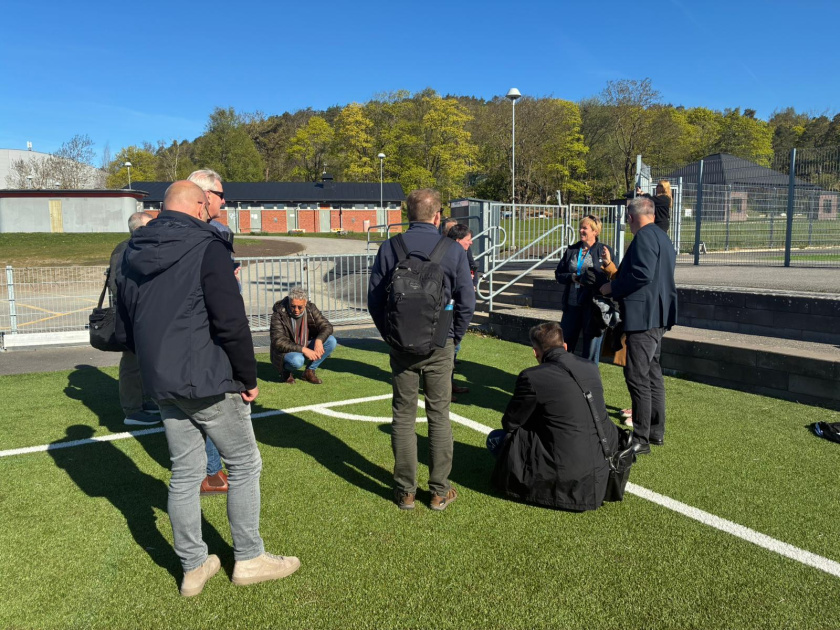
The host, Gothenburg Municipality, organised a highly insightful study tour for Board delegates. The first stop was the Kviberg football fields – a large-scale sports facility that is testing alternatives to conventional artificial turf. Delegates learned first-hand about this significant source of microplastic pollution and observed ongoing trials of more environmentally friendly infill materials. Kviberg is widely recognised as a frontrunner in this field, and the visit provided KIMO members with practical examples they can bring back to their own municipalities.
The study tour continued at the Maritime Museum and Aquarium, where delegates received a presentation on how Gothenburg Municipality works to protect vital marine biotopes, with a special focus on eelgrass meadows – a critical habitat for biodiversity and carbon storage.
A strong start to 2026
“This Board meeting in Gothenburg demonstrated exactly what KIMO does best: connecting local action to international policy,” said Preben Friis-Hauge, President of KIMO International. “From microplastics to ghost gear, we are moving forward with clear priorities and a growing sense of shared purpose. I want to thank Gothenburg Municipality for their exceptional hospitality and for showing us what ambitious local leadership looks like.”
The next formal gathering of the Assembly of Delegates will take place in October 2026, where the new microplastics resolution will be presented for adoption.