

Life Below Water?
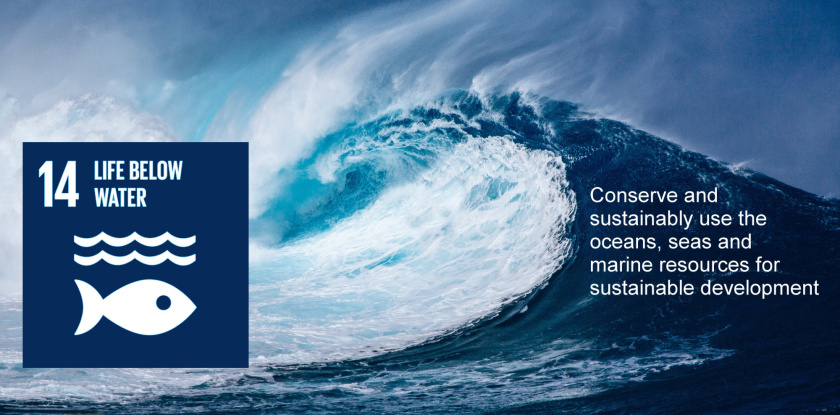
From 11-13 October 2017, the city of Malmö hosted ‘Life Below Water’, an international conference about local implementation of the UN’s Sustainable Development Goal 14 (SDG 14). The UN’s Sustainable Development Goals serve as a global road-map on how we can transition towards sustainable human societies. SDG 14 resonates particularly well with KIMO’s vision of:
Seas and coastal waters around northern Europe that are clean, healthy, safe and free from pollution and are preserved and enhanced for future generations
Sustainable coastal communities that are fully protected from the impacts of marine pollution
We were therefore honoured to partner with the the City of Malmö, the World Maritime University, the municipality of Lomma and municipalities in the Skåne region (to name a few) in pulling together an event to progress the implementation of this important global goal.
Conference Highlights
The conference kicked off with the arrival of Crown Princess Victoria of Sweden, a UN ambassador for sustainable development, who takes a keen interest in marine environmental issues. The children from the Bladins International School gave a heart-warming performance with their opening song about preserving the environment for future generations.
The first speaker, Swedish Environment Minister, Karolina Skog, gave the opening address in which she thanked the city of Malmö and KIMO for leading the discussion on healthy oceans and sustainable cities. Ms Skog also thanked KIMO for sending her our ‘Microplastics Resolution‘ which outlines practical steps that can be taken by government institutions to combat microplastic pollution. It was heartening to learn how seriously Sweden is committed to protecting the marine environment with a budget commitment of SEK 600 million in 2018 to combat marine pollution.
Mayor of Malmö, Katrin Stjernfeldt Jammeh remarked that Malmö was one of the first municipalities in the world to support the UN’s 17 sustainability goals and to make them its own. She added that the Marine Education Centre in Malmö, which was opened on the first day of the conference, would help impart ocean literacy to the next generation.
The founder of the Bellona Foundation, Frederic Hauge, delivered an inspiring talk on the potential for green solutions to disrupt the current ecologically damaging economic order. Mr Hauge used the example of renewable energy to illustrate that large-scale change will happen not because the business sector develops an environmental conscience but because the sustainable solutions become better and cheaper than the ‘dirty’ alternatives. He noted that the blue economy (the use of the sea and its resources for sustainable economic development) offers great potential only if we have healthy oceans. A promising example of an eco-friendly blue economy solution is Bellona’s sustainable aquaculture model, the Ocean Forest.
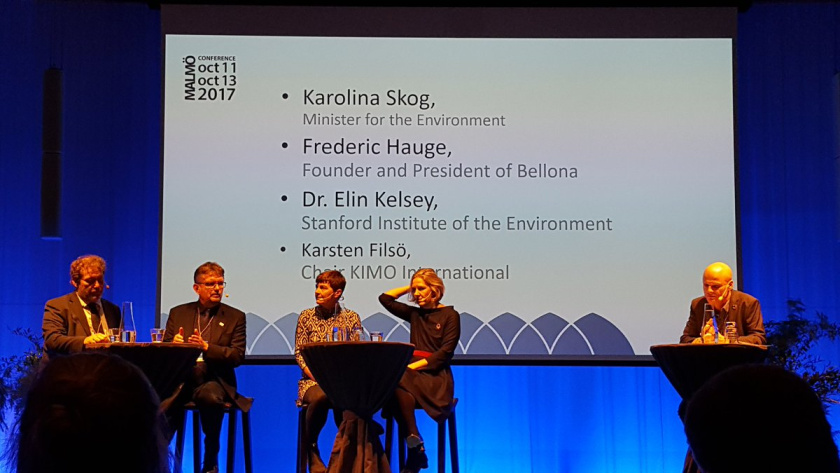
The first day ended with a panel discussion between the speakers mentioned above and KIMO president, Karsten Filsø. There was unanimous agreement that if SDG 14 is to become a reality, collaboration between local government, local community groups and local businesses will be needed. As the local government voice on marine pollution in northern Europe, KIMO has an important role to play in this process.
Technical Visits
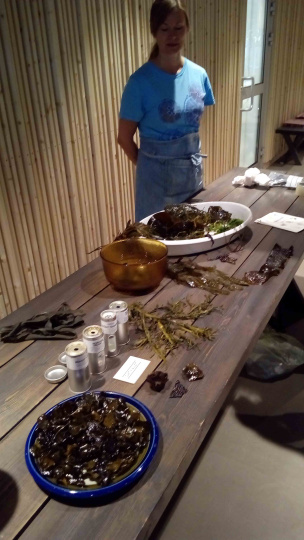
The hosts offered an outstanding selection of technical visits on day 2. Although the weather was a little windy on the day, delegates who chose to take the boat trip were fortunate to have a window of good weather for their sailing. Delegates who attended the World Maritime University were impressed by the dedication and passion of students from across the globe who offered a necessary perspective shift on certain environmental problems. For example, one student talking about the marine polluting ship-breaking industry in Bangladesh, observed that European countries were culpable in this pollution as they continue to send their ships to Bangladesh to be dismantled because it is cheaper for them to do so. If, however, we took responsibility for our own waste and did the ship-breaking in Europe where the environmental regulations are more stringent, we could cut down on this pollution. A timely reminder of the interconnectedness of the global economy and the environmental challenges that follow in its wake. The community food co-operative, Gro’up offered an insight into local sustainable seafood initiatives including a startup who farm fish in a barn (why create eutrophication when you can produce fertiliser?) to another startup making food products from wild sustainably foraged seaweed. Of potential interest to all KIMO members is the model of a community supported fishery in which locals in Malmö pay an upfront fee to a local fishermen’s cooperative to reserve a regular portion of their catch (much like the veg-box schemes that operate in the UK, except with fish!) – an innovative way to support small-scale local fishermen.
Nuts and bolts
If the conference speeches were the inspiration for further action, then the six dialogue seminars explored the technical challenges of implementing SDG 14 on the ground (or below water to be more exact!). The seminars focused discussion on the six themes of the conference:
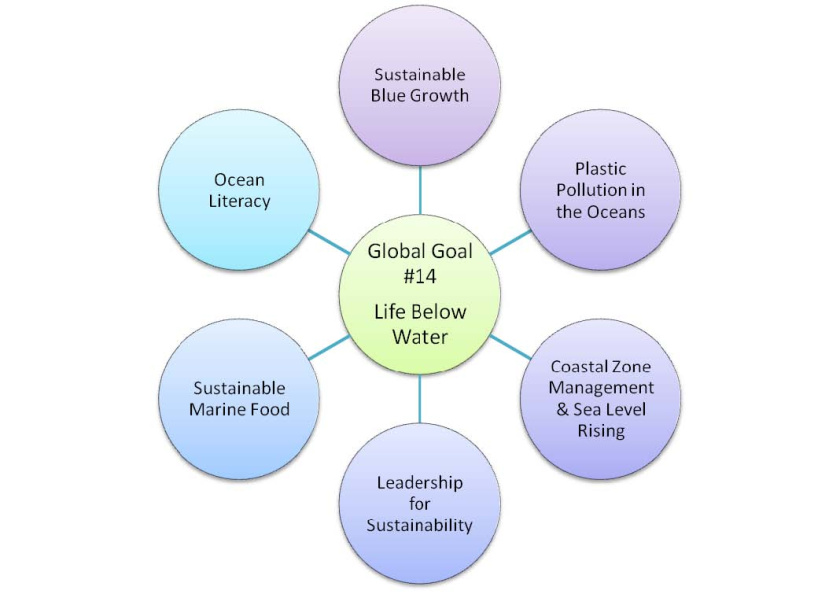
Also, in the nuts and bolts category were the meetings of the KIMO International Board and the KIMO National Coordinators which we somehow managed to fit into the busy conference schedule. These meetings dealt with issues such as the impact of the EU’s upcoming Port Reception Facilities Directive on our Fishing for Litter program and on strategies to further KIMO’s work by expanding membership, lobbying and increasing grass-roots activism in our municipalities.
The KIMO Annual General Meeting
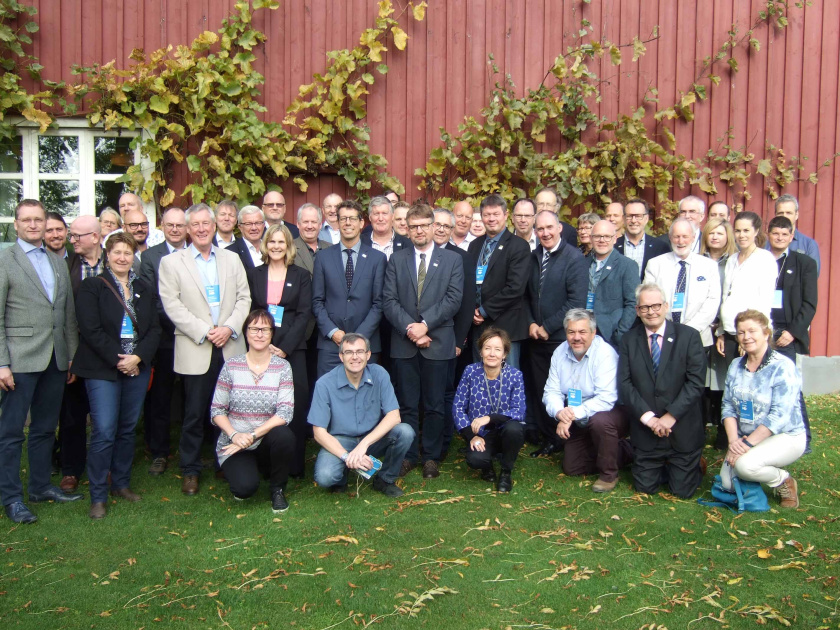
For an international organisation such as KIMO with members from as far afield as the Faroe Islands and Lithuania, the AGM presents the one opportunity per year for delegates from across the network to gather and discuss the core decisions which shape KIMO’s actions and strategic direction. This year’s meeting took place in the municipality of Lomma, a short bus journey from Malmö.
For many years, one of the challenges to incorporating more municipalities into the KIMO fold has been the small size of many municipalities in remote areas. Some municipalities serve a population of under 100 people and as such do not have the resources to join KIMO. We have long wanted to extend the benefits of membership to these small municipalities. After much lively debate, the assembly agreed to change KIMO’s longstanding membership structure to allow groups of small municipalities to band together and join KIMO as a group member. This is a positive change for the organisation and we look forward to welcoming new group members in the future. The assembly also agreed to add a new ‘Honorary Membership’ category to the membership structure. Honorary members have to be nominated by the assembly. This change will allow ex-KIMO delegates with a track record of dedicated ocean advocacy to continue as ambassadors for healthy oceans under KIMO’s umbrella.
Much of KIMO’s work is coordinated on a national level through the national networks. As always, the network reports which showcase the excellent work being done on a national level offer an injection of hope for the ecologically pessimistic. To read more about the work we’ve been doing over the last year on both national and international level, please download a copy of our Annual Report:
Each year the assembly discusses one or more ‘KIMO Resolutions’ which have been submitted for approval. Each resolution addresses a particular issue currently threatening the marine environment and is extensively researched to give a broad overview of the problem as well as practical steps to address it. Resolutions are always circulated to the relevant bodies which hold jurisdiction over the subject area. This year’s resolution deals with the need for integrated maritime spatial planning across national boundaries in order to decrease the risk of shipping accidents and the associated risk of marine pollution. This resolution was passed by the assembly and will be distributed in due course. The resolution is now available to download:
The assembly approved the appointment of Robert te Beest as the new president of KIMO International. Mr te Beest is a politician with a strong environmental conscience and is also the current chairman of KIMO Netherlands and Belgium. We look forward to continuing the battle against marine pollution under his leadership. Many thanks also to Karsten Filsø, the outgoing president for his years of untiring commitment to the important work which KIMO does. The organisation will continue to benefit from his skill and knowledge as he steps into his new role as senior vice president of KIMO. Congratulations also to Michael Törnkvist, chair of KIMO Sweden, on his appointment to the role of junior vice president.
Special thanks to Grethe Lindhe and all those working behind the scenes to make the event such a resounding success. We would once again like to thank our hosts, the City of Malmö for their outstanding hospitality. We look forward to working with them and all other KIMO members in finding ways to create human communities which live in harmony with with the myriad forms of life below water. Let’s make SDG 14 a reality.
Please also see The World Maritime University’s short article on the Life Below Water Conference