


This week the European Commission released its draft proposal to restrict the supply and sale of products containing intentionally-added microplastics, finally delivering on a 2017 pledge.
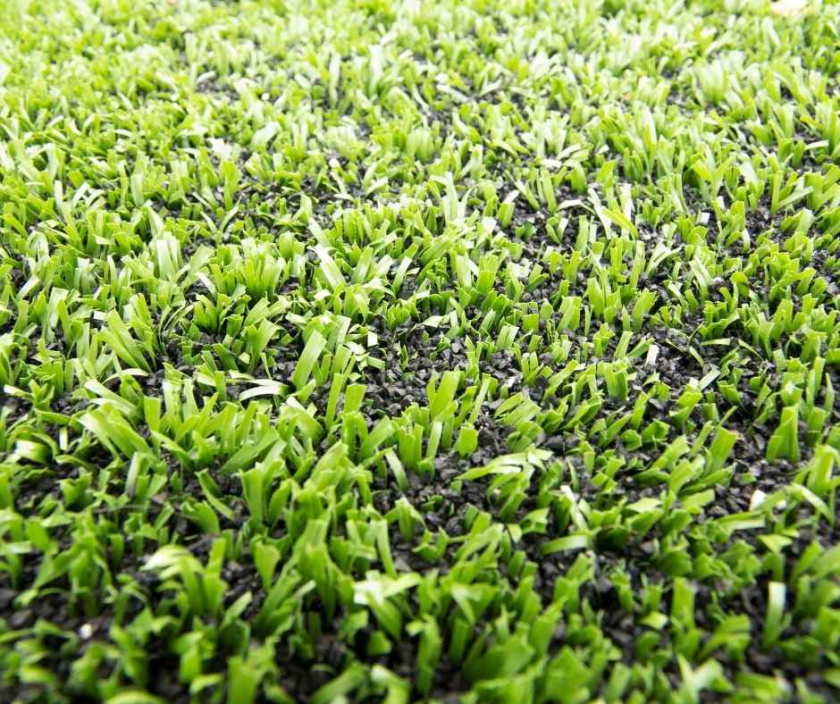
Artificial grass is used on sports pitches all over Europe. Unfortunately, these pitches are often covered with a layer of synthetic rubber granules – a form of microplastic.
Artificial grass sports fields are thus a significant source of microplastic pollution. The problem is growing because artificial fields are becoming increasingly popular as a durable, year-round alternative to traditional grass sports fields.
Each artificial grass surface consists of a mat of synthetic fibres held in place by a layer of sand. An additional layer of synthetic rubber granules (microplastics) improves the suitability of the surface for sports, with the synthetic grass fibres loosely holding these granules in place. However, the weather, pitch maintenance and the shoes and clothes of players can all dislodge and transport the microplastic granules away from the field.
Pitch owners add between 1-5 tonnes of granules to the average sports field each year, in order to replace lost granulate. To clarify, this means that pitches lose between 1 and 4 per cent of their granules every year. The most commonly-used type of rubber granulate is made from a synthetic polymer called Styrene Butadiene Rubber (SBR). Manufacturers grind up old tyres to make SBR. As a result, it can contain small quantities of harmful chemicals and heavy metals that wash out into the environment over time. Studies show that zinc, in particular, leaches out from the granulate in sufficiently high concentrations to harm soil biota and aquatic life.
Across Europe between 18,000 and 72,000 tonnes of granulate escape from artificial grass pitches annually. In addition to run-off, granulate escapes through rubbish disposal, surface water drains and players’ clothing.
Together with our friends at Fidra, we have worked for years to reduce microplastic pollution from sports pitches through our Pitch IN project.
We previously reported that the European Chemicals Agency (ECHA) had put forward a proposal to limit the use of intentionally added microplastics in products, such as artificial turf pitches, to avoid or reduce environmental pollution. Two options were under scrutiny:
- mandate measures to contain the infill within the boundaries of the pitch, ensuring that annual release of microplastics remains below 7g per pitch/per year or
- completely ban the use of infill containing microplastics, over a transitional period of six years.
This week the European Commission released its draft proposal to restrict the supply and sale of products containing intentionally-added microplastics, finally delivering on a 2017 pledge.
We are pleased to note that the draft proposal has opted for the highest environmental standards on the issue of granular infill.
The EC now propose a complete ban on synthetic infill in sports pitches (with a transition period of six years to allow users to switch to less harmful alternatives).
The main reason cited for the Commission’s preference was that infill material for use on synthetic turf sport surfaces is the largest contributor in terms of use of microplastics in products as well as the largest source of environmental emissions of intentionally-present synthetic polymer microparticles at European level. The proposal notes that although it would be cheaper to mandate for containment measures to reduce infill loss, such measures would still, when looked at cumulatively across the EU, result in large amounts of microplastic being discharged into the environment. The proposal notes that, seeing as the purpose of the proposed policy is to reduce microplastics and that a ban would be more effective than containment measures in this regard, the choice “could only be based on policy priorities”.
The draft proposal will now be discussed at the REACH Committee on 23 September.