


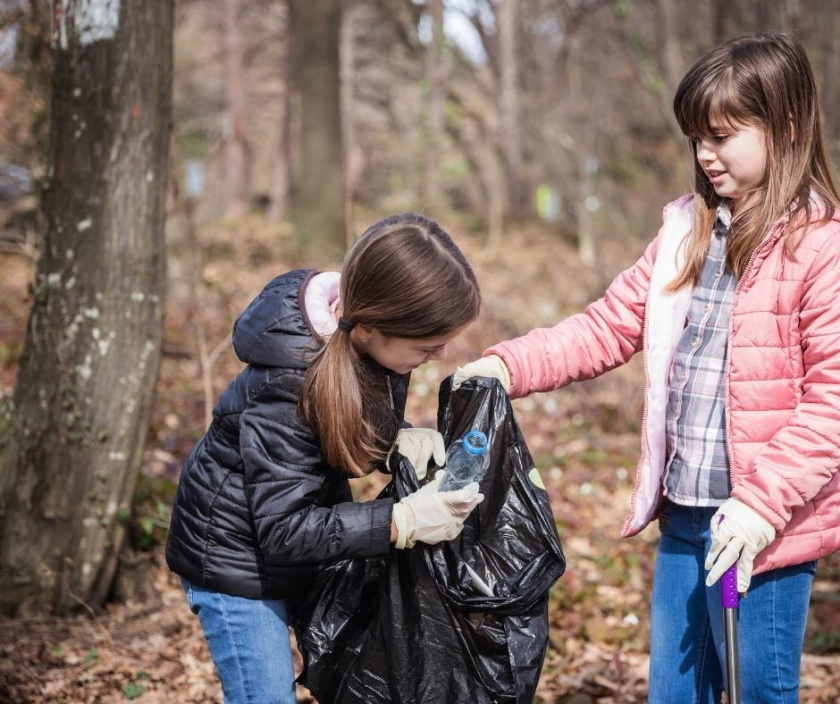
KIMO Sweden is looking forward to taking part in a nationwide citizen research project that is now being carried out by the University of Gothenburg. Anyone in Sweden is welcome to participate. The mass ‘Plastic Experiment’ is divided into two parts, a collection part for everyone and a voluntary analysis part for older school youth. Participants will contribute to a mapping of plastic waste in Swedish nature. Join in and do citizen research for the environment!
Plastic in nature is one of today’s major global environmental problems. In ForskarFredag‘s mass experiment 2022 – The Plastic Experiment – you can help the researchers map how much plastic waste there is in different types of nature in Sweden.
Plastic pollution in the oceans has received a lot of attention in recent years, but plastic litter is fundamentally a problem that comes from land. An overuse of single-use plastic and packaging as well as a lack of waste management mean that plastic often ends up in nature instead of being recycled. In order to solve the problems and reduce plastic waste in nature, we need to understand more about where, when and why plastic ends up there.
Through a nationwide citizen research project, where the participants collect and analyse plastic waste, together with a researcher The Plastic Experiment will make a scientific study of the extent of plastic in Swedish nature. How much plastic is there in nature? What type of plastic is it and how does it vary between different places and types of nature? These are some of the questions the project wants to answer. By recruiting young citizen scientists from across the country, the project can collect more data than was previously possible, and definitely a lot more than a single researcher could manage.
The plastic experiment is divided into two parts, a collection part for everyone and a voluntary analysis part for older schoolchildren. During the collection part, the participants will contribute to a survey of plastic waste in Swedish nature. The participants choose one of six nature types and collect plastic waste along a 100-metre stretch. The collected litter is weighed and sorted into different plastic categories (e.g. disposable cutlery, straws and plastic bags). The results are then reported via a digital tool.
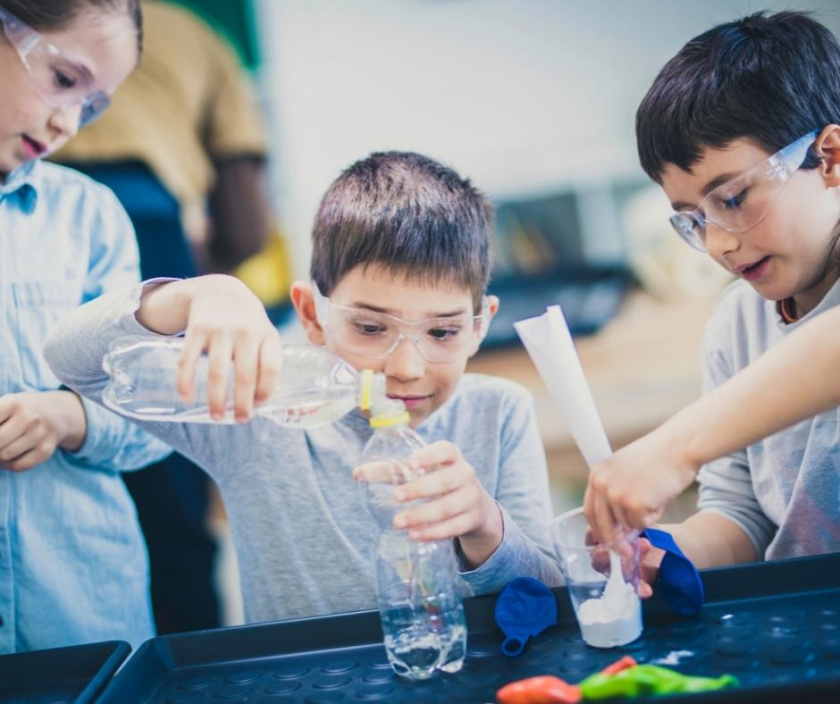
After collection, there is an opportunity to make a determination of the plastic for older school students in the voluntary analysis part. This is done with the help of a determination key where you test the properties of the plastic in e.g. water, in oil and during combustion. By using the supplied ‘key’, the outcome of the tests will help the citizen scientists to determine the plastic polymer type. The analysis part is best suited from year 7 and up.
When: The Plastic Experiment will take place in connection with ForskarFriday 2022 which runs from 26 September till 1 October
Where: All of Sweden
Popular science report: Spring 2023
Who can participate: Everyone in Sweden is welcome to join. School classes are an important target group as they can do a laboratory analysis part, e.g. as part of chemistry, biology and geography teaching.
The project is based on the Danish mass experiment Plastic Pollution and is a collaboration between the University of Gothenburg, Science & Public Affairs, the science festival, ForskarFredag and Keep Sweden Clean.
Do you live in Sweden? Then, register here to take part.