


A landmark EU report has set out the challenges, best practice and solutions in the circular design of fishing gear. Experts now hope that better design will help increase recycling and cut pollution.
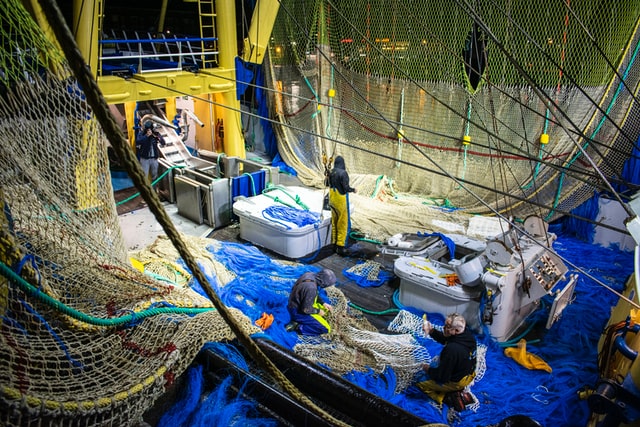
Current fishing gear, such as nets, ropes and other equipment is often difficult or even impossible to recycle. This presents a major challenge to fishermen and coastal local authorities who want to reduce waste in their communities.
The EU is leading global efforts to tackle plastic pollution with its Single Use Plastics (SUP) Directive and circular economy strategy. However, it often falls to member states to put plans into practice.
KIMO’s efforts
KIMO raises awareness and works to facilitate the behavioral changes to cut waste and prevent pollution. The Fishing for Litter project recovers all kinds of marine litter, including abandoned, lost or otherwise discarded fishing gear (ALDFG) – often referred to as ‘ghost gear’.
Recent KIMO research on net cuttings has also sought to tackle another source of fishing industry waste.
Yet even when fishing waste is properly disposed of, huge challenges remain for re-use and recycling.
EU study
The EU asked consultancy firm MRAG Europe to investigate challenges around end-of-life fishing gear. The 74-page ‘Study on circular design of the fishing gear for reduction of environmental impacts’ follows consultations with a range of stakeholders to develop and validate the ‘Technical, Circularity and Environmental Recommendations’ needed to support the development of guidance standards for the circular design of fishing gear.
European organizations will be able to integrate corresponding recommendations into their related organizational procedures and instructions. This will create an opportunity to establish, implement and maintain circular design in the development of new fishing gear.
Jan Joris Midavaine of KIMO Netherlands and Belgium, who provided input during one of the expert meetings said:
“KIMO’s members are local governments who want to maintain healthy seas and promote solutions to tackle plastic pollution. For fishing gear, this includes improved collection, recycling and possibly a major rethink at the design stage when it comes to the use of environmentally harmful materials.”
Circular design
A circular economy re-uses and recycles materials, instead of turning them into waste. But at present, it is very difficult to do this with old fishing gear.
The researchers found six main challenges to circular design in fishing gear including the quality and mix of materials used and the lack of legal obligation for better design.
Their study concludes that challenges can be overcome if the high costs are tackled and new regulations enforce recycling. However, the researchers also came to the clear conclusion that the current design of fishing gear is failing to facilitate complete re-use or recycling.
Toxic-free fishing
The changes needed will mean a return to the drawing board for the manufacturers of fishing equipment.
New designs will need to be free of toxic, hazardous and non-recyclable materials. But they cannot be any less durable, or perform worse than current options.
It will also need to be cheaper to produce and use circular fishing gear and repairs will have to be easier.
All aboard for new standards
As part of their research MRAG spoke to the European Association of Rope, Twine and Netting manufacturers and their suppliers and their affiliate industries. Together, they are calling on the European Standards Organisation (ESO) to develop standards for the circular design of fishing gear.
However, working with producers alone will not be enough. The report’s authors also stressed the need to work closely within the fishing industry to enhance and support the innovation of new technologies.
KIMO’s work continues
Until new designs are developed, cleaning up and disposing of fishing industry waste will remain an expensive challenge for local governments. KIMO International will continue to push for improvements in the design of fishing gear.
Follow KIMO International on Facebook, Twitter and LinkedIn and click here to sign up for our email updates.