


This article was originally published on the North Sea Region blog.
Next year, a new campaign will involve citizens in a river cleanup across the North Sea Region.

At the opening of the North Sea Conference, the president of the North Sea Commission Kerstin Brunnström and advisor to the Commission’s Marine Resources Group Yolanda Schmal presented plans for a public river cleanup campaign in 2020. This is a joint initiative by the North Sea Commission and KIMO, the European association of municipalities for sustainable seas.
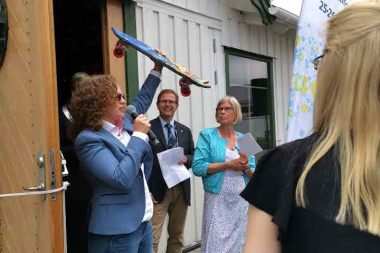
To mark the occasion, Ms Schmal had brought a beautiful “waste board” – a skateboard made from plastic litter collected in Dutch rivers, showing how plastic waste can be upcycled and become part of the green economy.

Rivers are plastic highways
The river cleanup is part of the organisers’ efforts to engage with citizens. “We wanted to do something about plastic litter in the marine space and we know citizens’ behaviour is key,” says Yolanda Schmal. “That’s how the idea came up.”
Beach cleanup was another good option, but in the end we decided to move one step back towards the source – people and businesses discarding the trash instead of recycling or using more durable materials. Rivers are the number one pathway of marine litter, so it makes sense to start there. Also, a lot of people are becoming more aware of the marine plastic soup, but fewer are aware that this problem begins in our rivers.

European rivers are chock-full of plastic, including items you can see as well as invisible micro-plastic. In fact, rivers are a key pathway of plastic in the oceans, acting as plastic highways. For example, a research team recently collected 875 pieces of plastic from the river Mersey in the UK in just half an hour.
Reducing plastic’s climate impact
The river cleanup initiative is linked to the theme of the North Sea Climate Conference, because the surge of single-use plastic now means the carbon footprint of plastic is twice as large as that of aviation. Whilst the world is searching for alternative materials, recycling is one sure-fire way of reducing emissions from plastic products.
KIMO organises and participates regularly in beach cleanup activities and recently its members have been focusing on rivers as these are main pathways that bring plastic litter into the marine environment. For instance, the organisation’s ‘Pitch In’ project aims to prevent microplastic pollution from entering rivers, canals and ultimately the ocean.
Arabelle Bentley of KIMO says:
Prevention is always better than cure – but while there is still so much single use plastic in the environment, it is vital we do what we can to prevent this from entering our seas and harming marine wildlife and habitats. KIMO is very happy to be working together with the North Sea Commission on this initiative which will encourage citizens across Europe to help stop the flow of plastics into our oceans.

Interested in joining this campaign?
Via many projects, the North Sea Region Programme is supporting healthy aquatic ecosystems and a circular economy in the North Sea Region. We fully support this campaign and wish the organisers good luck in engaging citizens and stakeholders all across the region.
We would encourage anyone who cares about our rivers and the North Sea to join the initiative.
Whilst this transnational idea was officially launched during the North Sea Climate Conference, the exact dates and other details will be released later. We recommend you to keep an eye out for further announcements on the websites of KIMO and the North Sea Commission.
See you by the river in 2020!