

Pollution from oil spills is a threat to coastal communities. Local governments want to see more international action to protect healthy seas.
Recent events around the globe have highlighted the devastating impact of oil spills.
While rules, regulations and increased safety measures have reduced the number of major oil spills in recent years, industry data does not include smaller discharges (of less than seven tonnes), which account for more than 80% of all spills.
Every oil spill presents a lethal danger to marine wildlife. Spills also have catastrophic consequences for the fishing and tourism industries which support coastal economies.
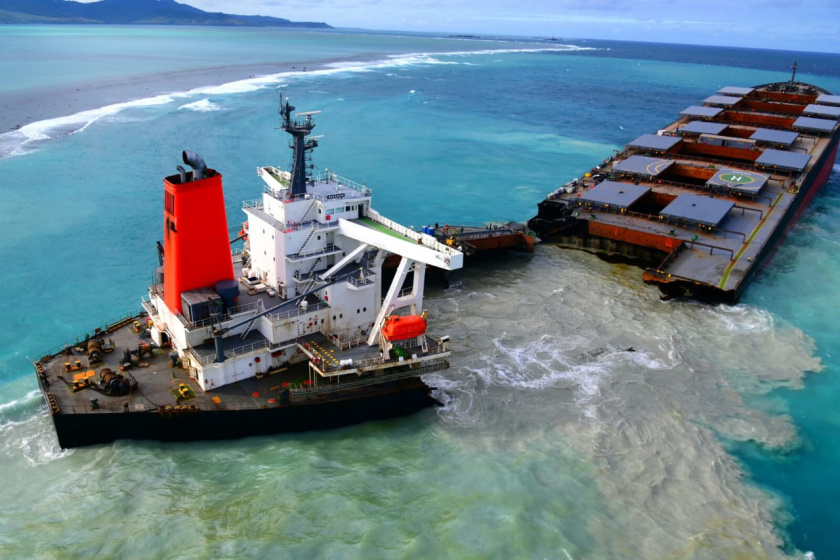
With larger and larger ships entering service each year, it is not just tankers that pose a risk. The MV Wakashio, which was grounded and split in half off of the coast of Mauritius in July 2020, is thought to have shed between 800 and 1,200 tonnes of heavy fuel oil, lubricants and diesel into some of the most environmentally sensitive coastal waters in the country.
In September 2020, a boiler exploded on the New Diamond tanker. The explosion killed a crew member and caused a diesel fuel leak. The Greek-owned ship was carrying nearly 2 million barrels of crude oil when it burst into flames off the coast of Sri Lanka.
At the end of summer 2020, NGOs are closely monitoring two other ships. The Safer, off the coast of Yemen in the Red Sea, and the Nabarima, off Venezuela in the Caribbean Sea are used for FSO (floating production storage and offloading). The French group Robin de Bois questions the condition and safety of the vessels.
A warning to Europe
While these events are taking place elsewhere around the world, they serve as a clear warning to Europe. Oil spills remain a very real danger to our coastlines.
By working together through KIMO, local governments can lobby national and international decision makers. New laws and regulations can reduce the risk of oils spills. They can also ensure liability and clean-ups in the event of an accident.
KIMO works towards the implementation of legislation that will raise health, safety and environmental standards in the international shipping and oil and gas industries.
Click here to sign up for updates from KIMO International or follow us on Facebook, Twitter or LinkedIn.