

FOR IMMEDIATE RELEASE
Date: 10 June 2025
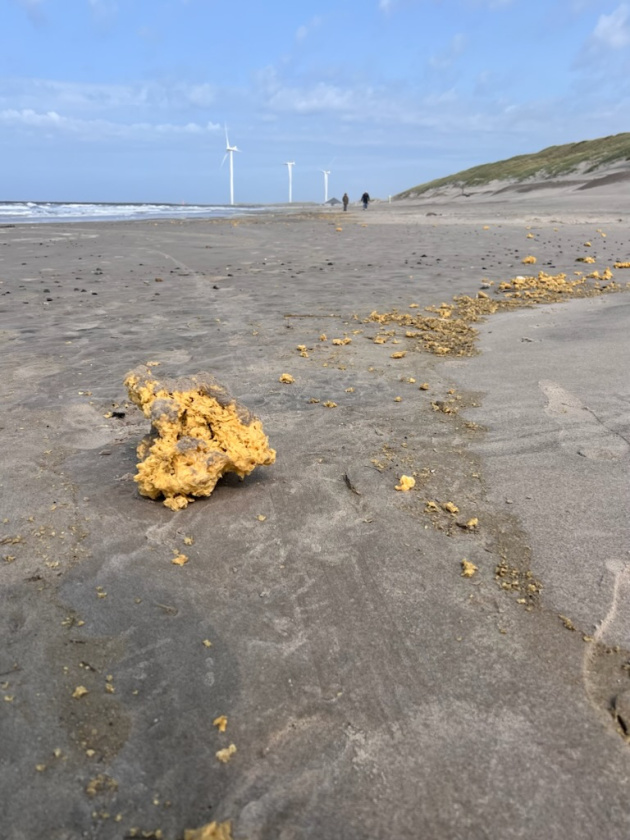
For many years, large quantities of waxy yellow or white clumps washed up on beaches all along the North Sea and Baltic Sea coasts. These clumps are solidified paraffin wax.
Paraffin pollution can be harmful to both humans and sea-life and until 2021 paraffin stranding incidents remained an ongoing problem for coastal communities.
Previously, tank washings of paraffin residues were not strictly regulated. For instance, a ship was allowed to dump paraffin together with waste water if more than 12 nautical miles from land.
KIMO made a decade long effort to raise the issue from the local level to the highest levels of decision making. Through lobbying National governments and bodies such as OSPAR and HELCOM, the case finally was supported by the countries cooperating through the regional seas conventions and taken up by the marine Environment Protection Committee (MEPC) of the International Maritime Organisation (IMO). As a result the international law of the sea (MARPOL) was amended.
Since 1 January 2021 tank washings have been more rigorously regulated as ships are required to wash out their tanks and discharge the washing water in specialised facilities in port rather than at sea.
According to the Danish Environmental Protection Agency no local municipalities had requested reimbursements for cleaning paraffin substances from beaches in the period from 2021 to 2024. Hence, the regulatory changes seemed to be working to prevent this type of pollution in the North Sea… until now.
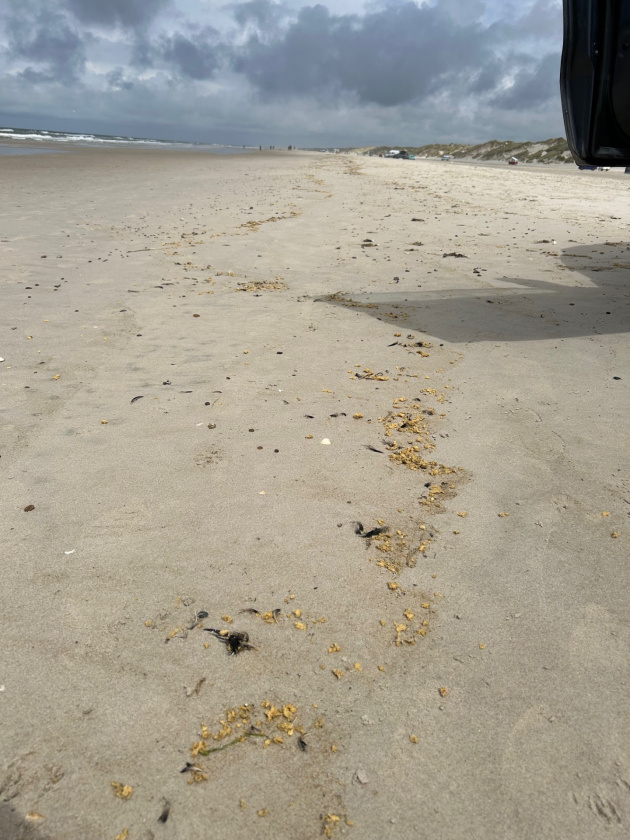
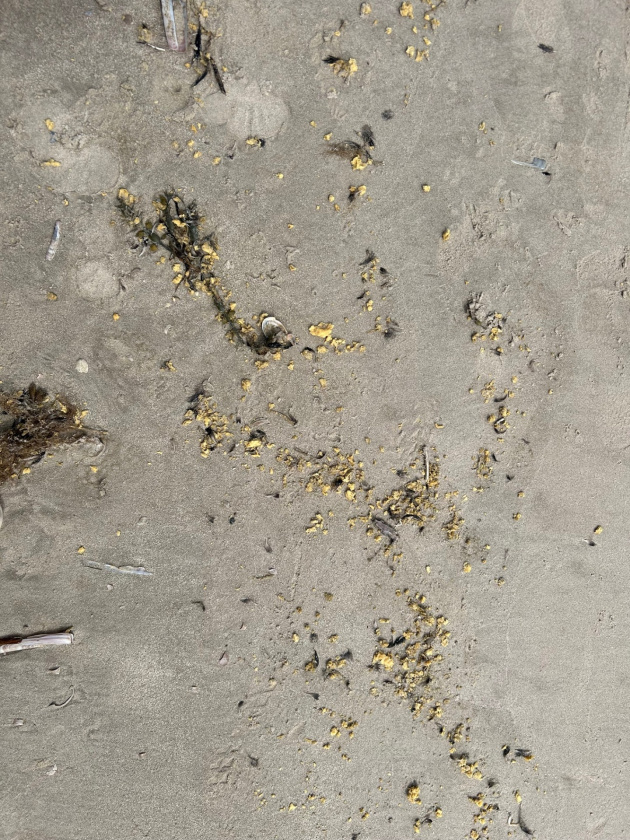
As of 10th June 2025 three KIMO Denmark member municipalities reported a new paraffin stranding incident with clumps of paraffin wax washing up at Børsmose and Vejers beach in Varde Municipality, at Hvide Sande in Ringkøbing-Skjern Municipality and in Holstebro Municipality. This poses a significant cleanup challenge to municipal staff.
Paraffin and its consequences
Paraffin wax is a by-product of heating or distilling crude oil. When transported by cargo ship, it is heated and piped into the ship’s storage tanks. When the tanks are emptied at the destination port, paraffin residues remain clinging to the storage tanks and pipes. This residue was routinely being washed out to sea when ships rinsed out their tanks to clean them.
Birds such as fulmars, cormorants and kittiwakes ingest small pieces of paraffin as food. Symptoms of contact with the substance are similar to damage from mineral oil. The plumage hangs together so that cold sea water reaches the skin. The birds can barely stay afloat. They die of exhaustion or hypothermia.
Previous cases
Over the past decade, there were numerous cases of paraffin contaminating European beaches. Incidents have been reported on the coasts of Denmark, England, France and the Netherlands. Paraffin has also polluted beaches in the Baltic Sea. Big pollution events were already reported in the early 1990s along the coasts of Netherlands, Denmark, and Germany. In one case, up to 8 tons of paraffin wax were released by a single tank-washing and stranded on a German beach in 1992, while in 1993 a single pollution event was estimated to have killed more than 2,000 birds in the northern part of the Netherlands.
In Denmark, at least 10 coastal municipalities were affected by this pollution between 2009 and 2020. The total costs for clean-up were over DKK 10 million (approx. 1.3 million EUR). This was thankfully reimbursed to the municipalities by the Danish Environmental Protection Agency. A single incident in April 2016 affected more than 50 km of coastline and required the removal of 200 tons of contaminated material (paraffin and sand).
Further action needed
Despite the positive effect of the current regulations, the most recent incident raises concerns as to whether these regulations are being properly monitored and enforced.
“Nobody wants to see a return to the old days where paraffin wax stranding incidents were an annual event. The authorities need to investigate this incident to find out how this was allowed to happen despite regulations being in place which should prevent it,” said Ryan Metcalfe, National Coordinator for KIMO Denmark.
The Danish Environmental Protection Agency reimburses municipal expenses for the collection and disposal of paraffin (as it is classified as an oil product) in accordance with the Danish Marine Environment Act. This is a great help to municipalities in dealing with the cleanup costs of such an incident. However, since municipalities need to report paraffin wax stranding incidents to the Danish Environmental Protection Agency prior to undertaking remediation measures, cleanup efforts can be delayed while Ministerial approval is pending.
At the international level KIMO calls on the IMO to examine if the current regulations are being properly enforced and if more systematic monitoring and action is needed.
At the national level KIMO calls on the Danish Environmental Protection Agency to report this worrying incident to the Danish authority responsible for marine and coastal protection.
###
For further information about KIMO International’s work to stop paraffin pollution, please contact:
Lisa Bugge Nør Larsen
Executive Secretary of KIMO International
+45 23 35 94 57
For more information about the current paraffin wax stranding incidents in Denmark please contact:
Ryan Metcalfe
National Coordinator of KIMO Denmark
+45 61 79 69 49
About KIMO:
KIMO is a network of 80 coastal municipalities in nine countries working together to protect, preserve, and enhance the marine environment. Founded in 1990, KIMO represents over 7 million people across Europe, advocating for sustainable practices and policies to ensure the health of our oceans for future generations. Since January 2025 KIMO’s International Secretariat has been hosted by one of its members, Aalborg Municipality.