


Beaches and coastlines of KIMO International member municipalities in the Wadden Sea area have been polluted in the recent MSC Zoe container ship accident. KIMO highlights the systemic failings of the current maritime transport regulatory regime and puts forward recommendations for preventing future accidents of this nature.
Press Release
Shetland Islands, January 10, 2019
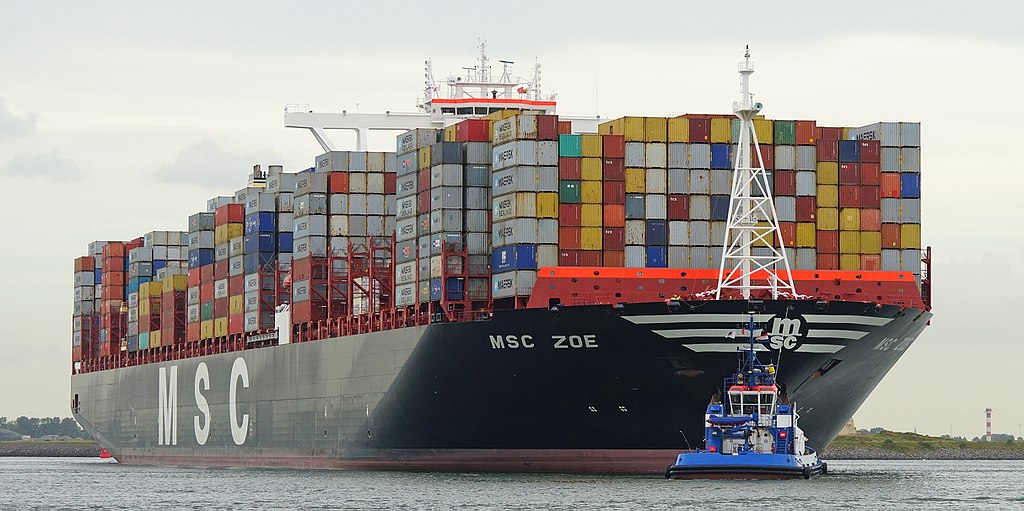
On 1st January 2019 the Mediterranean Shipping Company’s ultra-large containership MSC Zoe lost more than 270 containers overboard in German waters after being caught in heavy seas between Vlieland, Netherlands and the German Bight in the south eastern North Sea.
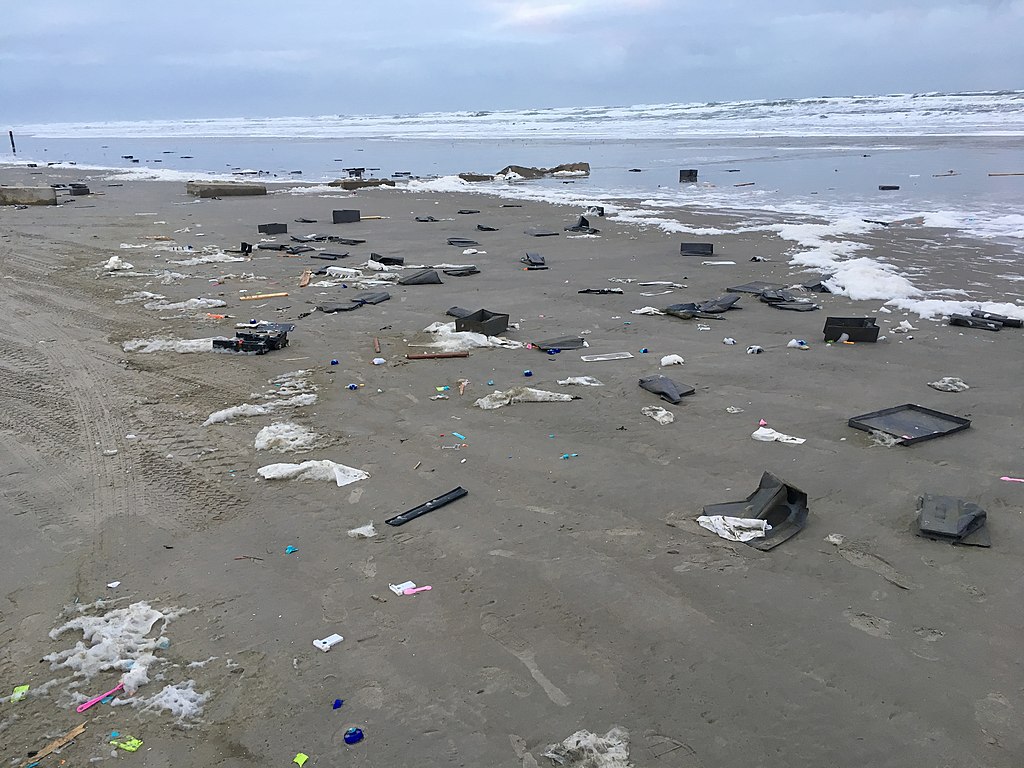
A significant amount of debris from broken containers including toys, household items and white goods has washed up on Dutch and German islands in the Wadden Sea, an area awarded UNESCO World Heritage and Natura 2000 status and recognised by the International Maritime Organisation as a Particularly Sensitive Sea Area (PSSA) requiring special protection.
Volunteers, fishermen and the military are currently involved in extensive clean-up operations but it is expected that some of the lost cargo will continue to be washed up on beaches and shores for many months and the extent of the pollution will increase as the debris is carried further by the strong currents. The Dutch Rijkswaterstaat and the German Havariekommando report that 220 containers have been located with sonar in the North Sea, another 18 containers have reached the Dutch coast and 1 washed ashore in Germany. 42 containers have not been found yet.
So far, 700 tons of waste from broken containers have been collected at the Dutch beaches and 45 m³ of stranded goods have been removed on Borkum. Among them were toys, bike parts, packaging and TVs. Some goods were found and picked up at sea, among them car parts.
The potential environmental risk to the Wadden Sea ecosystem from this incident is high. Plastic components and packaging from the cargo are likely to cause harm to marine life and seabirds through ingestion, entanglement and eventual breakdown into microplastics. Some of the containers were carrying peroxide, known to be toxic and hazardous to health. Several tons of peroxide have been reported to have washed up on beaches and a health warning was issued to the public to avoid these areas. Lost containers on the seafloor also represent a navigational hazard to shipping and fishing vessels and can fail under pressure with subsequent leakage of the content.
Pollution from lost shipping containers is also an ongoing problem for coastal communities. KIMO first raised the issue of pollution from containerships and the lack of robust compensation regimes with regard to this sector of the shipping industry in 1995 at the 4th North Sea Ministerial Conference in Esbjerg and subsequently at the 5th Ministerial Conference in Bergen 2002 where Ministers agreed “to make coordinated efforts within IMO to review, strengthen and introduce, if appropriate, further compensation and liability regimes.”
However, almost 25 years later there is still no specific international liability and compensation regime in place for spillages of non-toxic products (other than oil), although any incident happening within a country’s Exclusive Economic Zone (EEZ) is subject to national law. In the case of the MSC Zoe, MSC is compiling a detailed summary of the numbers of lost and damaged containers and that it will strive to account for lost or damaged cargo1. However, even when a ship owner’s insurance is willing to meet the initial clean-up costs, a portion of the lost cargo remains on the sea floor or in the water column and continues to pollute the environment for years to come placing a significant operational and financial burden on coastal authorities.
KIMO represents over 75 municipalities working together for sustainable seas. KIMO is of the opinion that there are several improvements that could be made to reduce the number of containers lost from vessels every year and the associated impacts on coastal communities. KIMO urges all European governments, the European Commission and the European Parliament to act together at the International Maritime Organisation (IMO) to establish the following measures:
- Robust enforcement and monitoring of compliance with regulations on Verified Gross Mass (VGM) and Cargo Securing Manual (CSM);
- Competent revision of the ISO standard requiring containers with reduced stacking or racking capacity to be marked so they can be identified, stowed and lashed safely on deck2;
- GPS beacons to be attached at all containers so they can be identified and retrieved if lost overboard;
- Financial penalties and compensation regimes for the retrieval of lost containers and their contents – the polluter pays;
- Implementation of a Convention on liability and compensation for damage in connection with the carriage of non-toxic substances including strict liability on ship owners for pollution from their vessels, compulsory insurance for all vessels and a reserve fund to cover shortfalls in compensation.
1https://www.msc.com/arg/notices/2019-january/msc-zoe-container-spill-cargo-situation?lang=en-gb
2http://www.worldshipping.org/industry-issues/safety/containers
Notes to editors:
Contact:
KIMO Secretariat
Phone: +44 1595 744807
Email: [email protected]
Website: kimointernational.org
KIMO (Municipalities for Sustainable Seas) is an association of coastal local authorities whose goal is to eliminate pollution from the Northern Seas. The organisation’s members include 160 local authorities representing over 6 million inhabitants in Belgium, Denmark, Faroe Islands, Germany, Lithuania, the Netherlands, Norway, Sweden and the United Kingdom.