


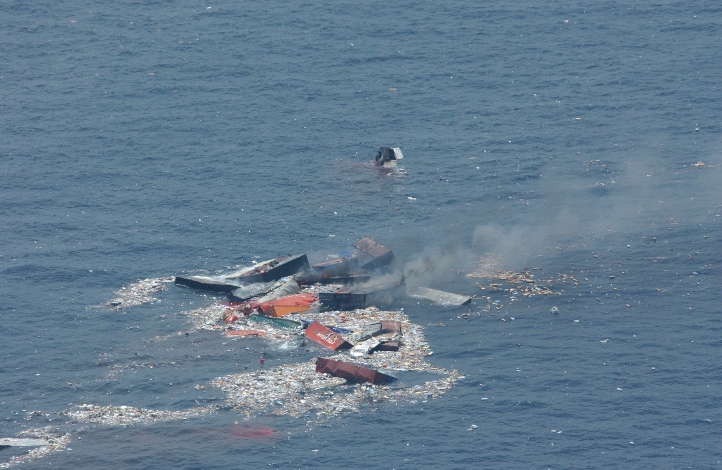
Since 2005, KIMO has campaigned to prevent pollution of our seas resulting from the loss of shipping containers. At the same time we have been working together with fishermen to clean our seas. The Fishing for Litter scheme is aimed principally at litter that is present at the seafloor. Most marine litter accumulates gradually, however, sometimes an accident can result in a massive influx of marine litter. The MSC Zoe incident in which 345 containers were lost at sea brought these two aspects of KIMO’s work together. The accident caused large-scale pollution of the Wadden Sea Islands region and resulted in a huge and sudden increase in the amount of marine litter turning up in the nets of fishermen involved with the Fishing for Litter scheme. The islands’ beaches were covered with litter of all kinds and the actions and cost to clean these were immense. The environmental and economic impacts were, and still are, extensive. Both coastal municipalities and fishing industry were hit hard. Due to the large amounts of new litter the event produced KIMO’s Dutch Fishing for Litter scheme was likely to be jeopardized. Once again we are reminded how essential maritime transport safety measures are to not only minimise environmental harm in the event of an accident but also to prevent the loss of containers in the first place.This case produced information and insights that can serve well as input for an international discussion on the topic.
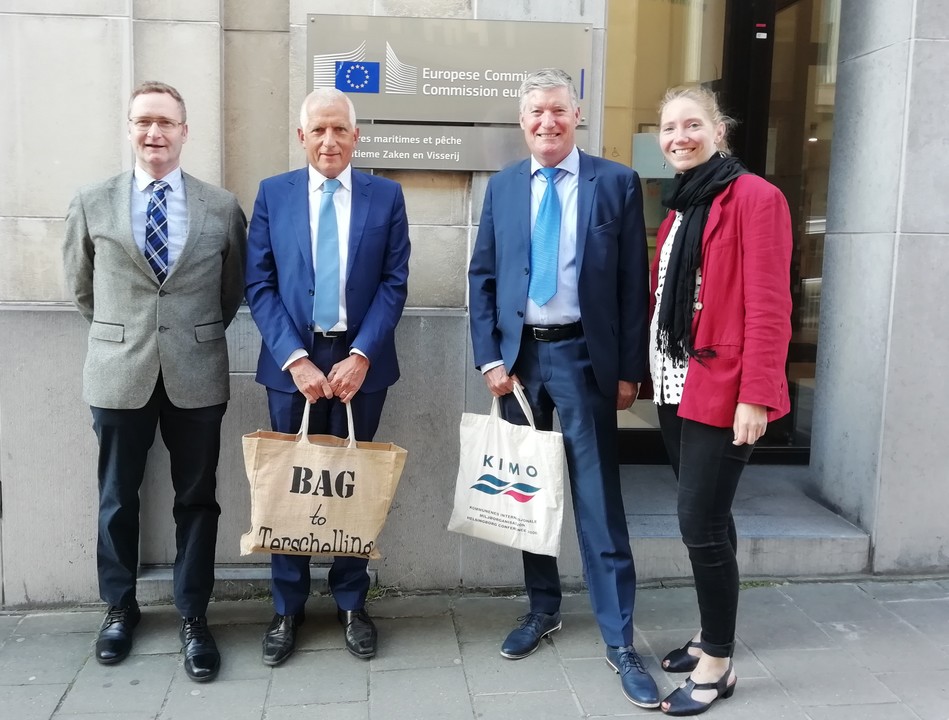
On 4 July, The European Commission organised a workshop to discuss the environmental impact of container transport, but also the social, legal, technical and financial aspects. A broad range of stakeholders (approximately 50 attendees) from industry, (national) governments, institutes and NGOs attended this event. KIMO delivered jointly together with the Association of Wadden Sea Islands (Samenwerkingsverband Waddeneilanden) and VisNed, Dutch Association of Fishers presentations on the recent MSC Zoe incident in the Netherlands.
The impact of the litter on the islands’ beaches was explained by Bert Wassink, Mayor of Terschelling Municipality while prevention at large was explained by KIMO’s honorary member Albert de Hoop, former mayor of Ameland Municipality.
Mike Mannaart of KIMO explained the impact of the event on the Dutch Fishing for Litter scheme, the municipalities and fishermen. He stressed the need to deal with liability and the financial issues that arose. International action is needed to address this ocean governance issue adequately. The establishment or improvement of international funds could be an option, e.g. including container issues in the European Liability Directive (ELD). Oil spills are being addressed and liability is acknowledged but pollution originating from lost containers is dealt with differently. Why?
Oil spills are being addressed and liability is acknowledged but pollution originating from lost containers is dealt with differently. Why?
Barbara Hoelierhoek of VisNed representing the affected fishermen, explained the impact the recent disaster had on the fishing industry. A number of other stakeholders explained their views as well regarding lashing, impact, liability et cetera. The shared conclusion was: `one lost container is one too many`.
one lost container is one too many
It was heartening to see the broad representation from government, maritime industry, fishing and environmental NGOs present at this event. The European Commission is very much aware of this issue and we hope that further steps to improve the industry will be taken.
KIMO continues to call for:
- the establishment of a Convention on Liability and Compensation for Damage in Connection with the Carriage of Non-Toxic Substances including strict liability on ship owners for pollution from their vessels, compulsory insurance for all vessels and a reserve fund to cover any shortfalls in compensation (KIMO Resolution 1/05)
- the establishment of the following measures:
– Ensure adequate load planning is implemented and enforced
– Implement a robust system for reporting of lost containers
– Attach automatically activated beacons to all containers to facilitate retrieval
– Review the construction criteria for containers with regard to current stacking heights
– Review specifications and maintenance regimes for the twistlocks that attach containers
– Introduce financial penalties and compensation regimes for the retrieval of lost containers (KIMO Resolution 1/08)