


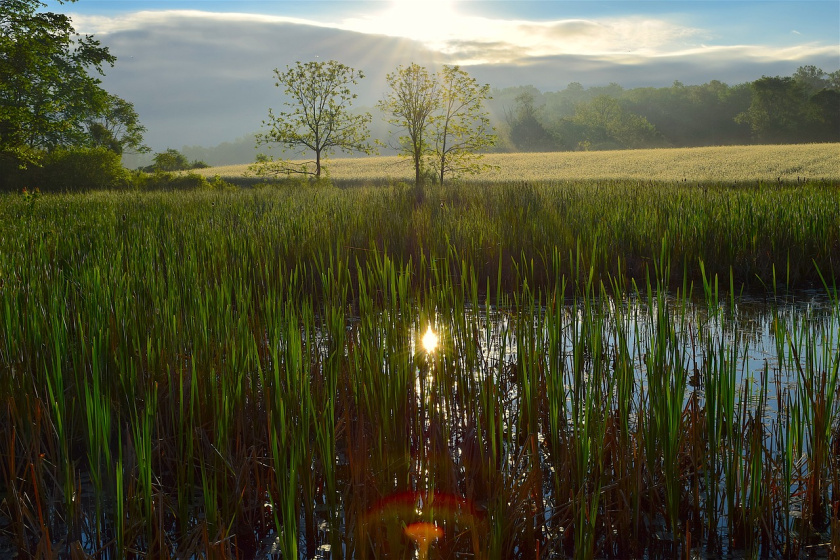
Every municipality has a responsibility to maintain its environment for the sake of its inhabitants. In Sweden, several KIMO member municipalities are looking at ways of promoting natural ecosystems to provide necessary services for cities and their inhabitants. Oftentimes this method has proven to be not only environmentally friendly but also makes economic sense.
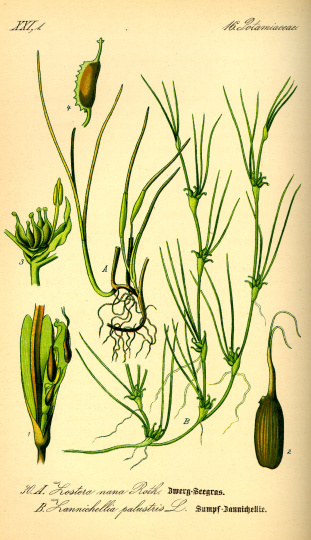
For example, Malmö City has carried out successful projects to re-establish eelgrass. It has been calculated that eelgrass is responsible for 15% of the ocean’s total carbon absorption. Eelgrass provides food and serve as a nursery for many fish species and stabilises the seafloor with its roots. It improves water purity by filtering polluted runoff and by absorbing nutrients such as nitrogen and phosphorus thereby reducing eutrophication. It also protects our shorelines from erosion by absorbing wave energy. Researchers at Gothenburg University have estimated the economic value of the lost ecosystem services from the disappearance of eelgrass beds along the Bohus Coast to have a value of at least SEK 4 billion (approximately £373 million). Municpalities interested in re-establishing eelgrass beds should take a look at this interesting case study conducted on the west coast of Sweden.
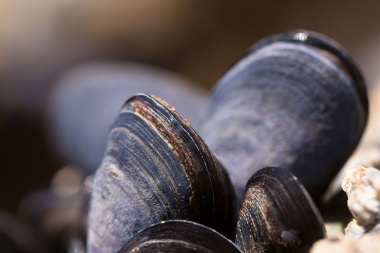
Another innovative way in which Malmö city is cleaning sea water and reducing eutrophication is by using blue mussels! 75 square kilometres of the Öresund seabed is covered with mussels. Mussels remove nitrogen from the water as they feed thus cleaning the water and preventing oxygen depletion in a natural way. The benefits don’t stop there. After the mussels have cleaned the water they can be harvested for use as food, animal feed or for generating biogas. The city’s blue mussel project identifies the best economically and ecologically sustainable methods for harvesting the mussels. If the mussels are not harvested but live the entire life cycle in the ocean, they break down after their death and release nitrogen and phosphorus back into the water. In the Bucefalos research project, each hectare of blue mussels growing on the Öresund Bridge have been estimated to remove approximately 500kg of nitrogen from the environment per year. Mussels aren’t the only ecosystem cleaning service in town though. Seaweeds absorb persistent inorganic nutrients and toxic substances in the water column even more effectively than mussels. And unlike mussels which use oxygen as they filter and respire, photosynthetic seaweeds generate oxygen, making for a more oxygen-rich system. If the seaweed is then broken down in an Integrated Sequential BioRefinery, some parts can be used, for example, in cosmetics, while separating out the pollutants. As with mussels, the seaweed has to be harvested before it dies and decomposes to prevent the filtered substances leaching back into the environment. Looking forward, it seems that using a combination of mussel beds and seaweed might be an extremely effective method for municipalities to clean their waterways.
In Sweden, 80 percent of the wetlands are affected by human intervention. These interventions compromise the natural ecosytems’ ability to clean water, which leads to more pollution in the ocean. When wetlands are compromised, soil, plants and microorganisms can not capture and break down pollutants and nutrients before reaching the ocean. A good example of how water regulation can be improved within a river basin can be seen in the Höje river area in southwestern Skåne. The river flows through high-grade arable land in the municipalities of Lund, Lomma, Staffanstorp and Svedala. The landscape around the river has lost about 90 percent of its wetlands while the river itself has been shortened to half of its original length. To mitigate the negative effects associated with this habitat loss, a two-stage dike has been established along 12 km of the 35 km long river. When constructing a two-stage dike, a terrace is created on both sides of the watercourse’s middle vein. In addition, the river banks are sculpted to have a lower gradient. This leads to the entire river bed being widened and provides room for significantly more water at high flows. At the same time, the depth in the middle of the river is enough for a wide range of aquatic species to thrive thereby increasing biodiversity. The risk of erosion, floods, nutrient leakage and eutrophication is decreased. The economic value generated by these ecosystem services is estimated at between SEK 6.5 million and SEK 12.1 million for a 50 year period. Since the construction costs are estimated to be between SEK 6.3 million and SEK 10.6 million, the investment pays for itself after 50 years in strict economic terms without factoring in added benefits such as biodiversity, tourism and recreational opportunities.
While wetlands and cycle paths are not concepts that most people would readily associate , one forward thinking municipality has done just that. Värmdö municipality restored the urban wetland in Hemmesta at a cost of SEK 2.5 million (£235,000). Since the wetland reduced the flooding risk for a nearby cycle path, the muncipality no longer needed to make changes to the path which would have cost them up to SEK 4 million (£376,000)
These inspiring examples set by Swedish municipalities should encourage all local authorities to look again at the potential value of ecosystem services. Often simpler ecosystem services are overlooked in favour of a technological fix. In many cases, ecosystems services do a better job and do it cheaper to boot. However, the argument is not simply an economic one. By restoring natural systems we also restore some part of our humanity.