


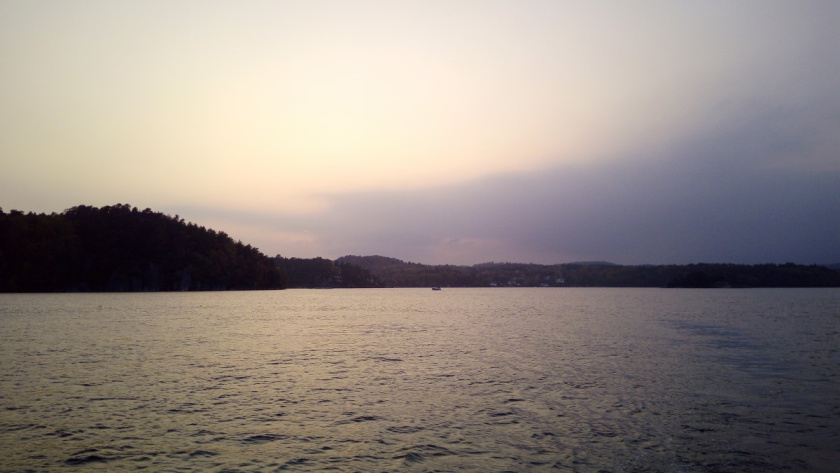
A gentle sun hovers over the bay as we approach the boat. Autumn is in the air. Norwegian autumn – not to be trifled with. The only sound drifting along on the late afternoon breeze is that of the small boat engine puttering away. We’re visiting Lillesand, our newest KIMO member municipality. Our hosts have organised for us to meet an exceptional local engineer with a unique pastime.
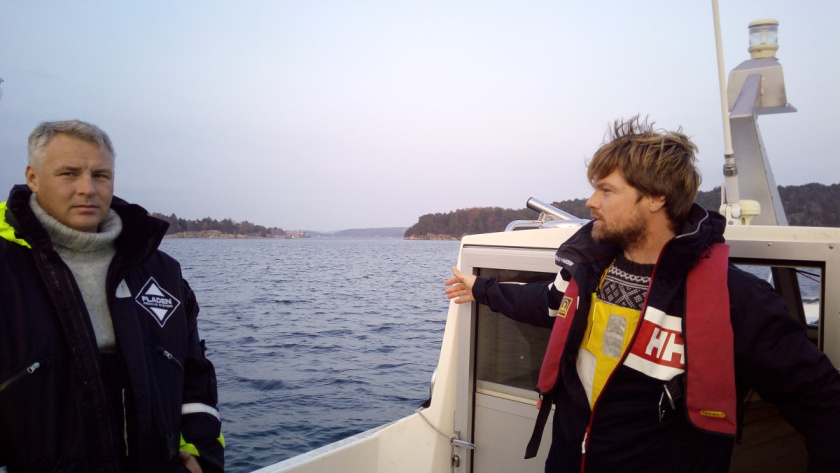
Dressed in a sweater and wellies, Tord Aslaksen, wanders about the small boat making preparations for our trip out across the bay. Lillesand is a beautiful coastal town on the southern Norwegian Skagerrak coast. White wooden houses look out over an archipelago of small islands – the perfect spot to come for a summer holiday as many Norwegians and Danes do. The area is prime habitat for crabs and lobsters and hence also for crab and lobster fishermen.
Tord greets us warmly as we step over the gunwale to join him on board his boat. Introductions over, the boat edges out into the calm waters of the bay. We’re out to do some hunting of our own – our quarry, however, is not lobster but lobster pots. Having grown up in the area, Tord is a valued part of the local community and is well versed in the ways of the lobster fishermen – reasons for the success of his project.
There has been talk for a number of years to designate the section of the bay we’re sailing across as a lobster sanctuary. Although the sanctuary has not yet materialised, efforts to make the bay more lobster-friendly are already under-way with the Green Bay Project at the vanguard. Tord explains the scale of the problem. Some 9,000 recreational fishermen are registered in the region. Each fisherman is legally allowed to set ten lobster pot traps at a time. Although the numbers are staggering, the fishery itself would be sustainable were it not for the presence of “ghost pots”.
A “ghost pot” is usually a lobster pot which has been lost. As such it remains on the seabed and continues to catch crabs, lobsters and fish. The real problem is that it doesn’t just do this once until the pot is full. Captured animals die and decompose acting as bait for the next generation of animals that get trapped and so the cycle continues. Since long-wearing materials are used, ghost pots could continue fishing for hundreds of years. Enter the Green Bay Project.
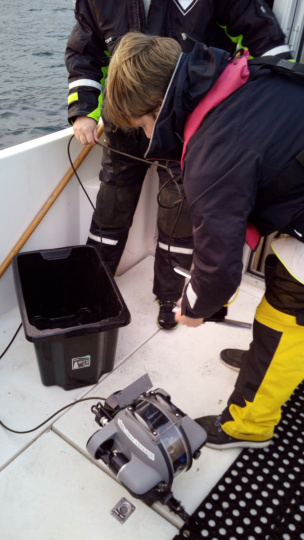
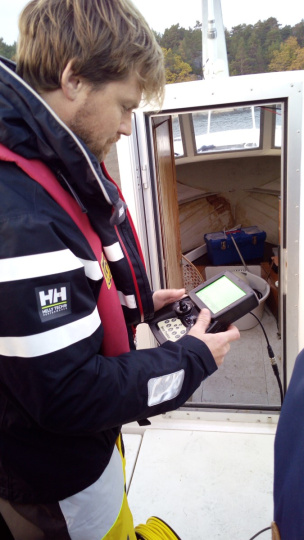
Once we’re out far enough, Tord cuts the engine and retrieves the star of the show… a remotely operated submersible that has one mission – search and retrieve ghost fishing gear. Think R2d2 crossed with a cormorant. The Remotely Operated Vehicle (ROV) dives, Tord drives and we watch as the depths beneath us blip into view through the camera eyes of our little robot diver. Images from the sea floor are beamed back at three wide-eyed KIMO-ites clustered around the tiny control screen. We see some fish and crabs but no lobster pots. This on its own is testament to the thoroughness with which the Green Bay Project has already cleared the area.
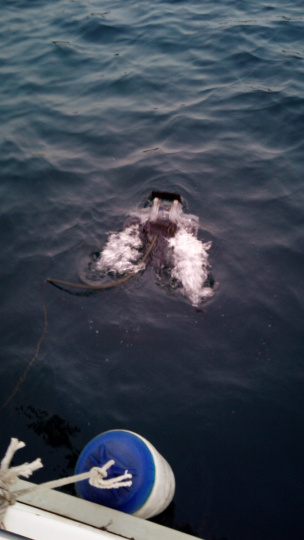
The ROV continues to roam the seafloor. “Once we’ve deployed the submersible, we always try to bring something back”, explains Tord as he manipulates the controls to turns the craft around. He has noticed something odd waving about on the seafloor. Using the manipulator arm on the front of the ROV he reaches into the sand, closes the pincers at the end of the arm and puts the ROV in reverse.
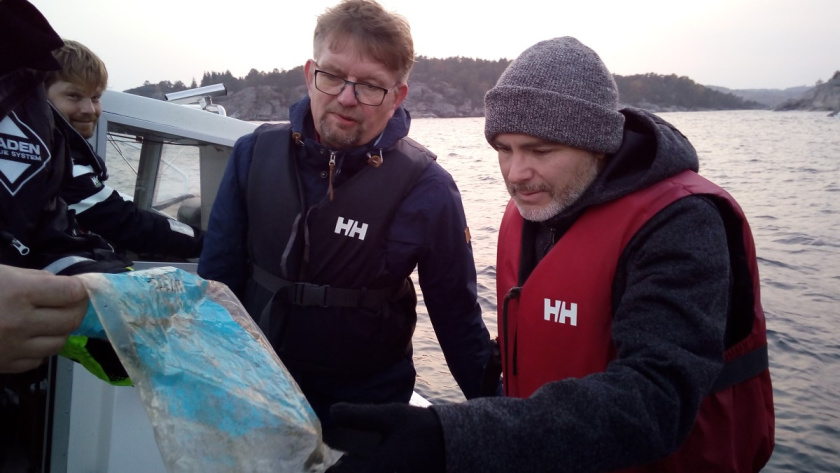
“There!” A plastic bag emerges from the sandy seabed. The ROV returns to the boat, ‘catch’ in hand. In a former life, the plastic bag hosted brioche buns – a monument to a fisherman’s lunch or perhaps a family picnic. The light is dimming fast now and we decide to make our way back to shore. On the return trip, we talk about ghost fishing gear more generally.
Tord explains how expensive it is to pay for a team of divers to remove ghost gear. Many work hours are needed to sort out the logistics, not to mention specialist equipment and supplies. And lobster pots are often lost at depths greater than 40 metres which would require a technical dive team to retrieve them pushing the costs even higher. By contrast, Tord can head out into the bay at a moment’s notice and, using his ROV, can single-handedly remove ghost lobster pots, even ones deeper than 40m in a matter of hours. My mind races at the possibilities – if this project were to be scaled up, it could make a huge dent in the ghost gear problem – especially where pot fisheries are concerned. In the summer and autumn of 2018 alone, the Green Bay Project has removed 200 ghost pots from the waters around Lillesand. Although project running costs are lower than those for a full scale dive team, the project still requires financing. Without the generous financial support of the Norwegian Environmental Agency in 2018, the project may never have got off the ground.
News of the project’s success has already spread throughout the region and local fishermen have started to approach Tord, telling him exactly where they lost a pot. This is a real win-win, as the pot can be retrieved before it becomes a ghost pot and the fishermen get their gear back. The boat pulls up at the jetty and we disembark. Retrieved lobster pots are stacked in a pile to one side.
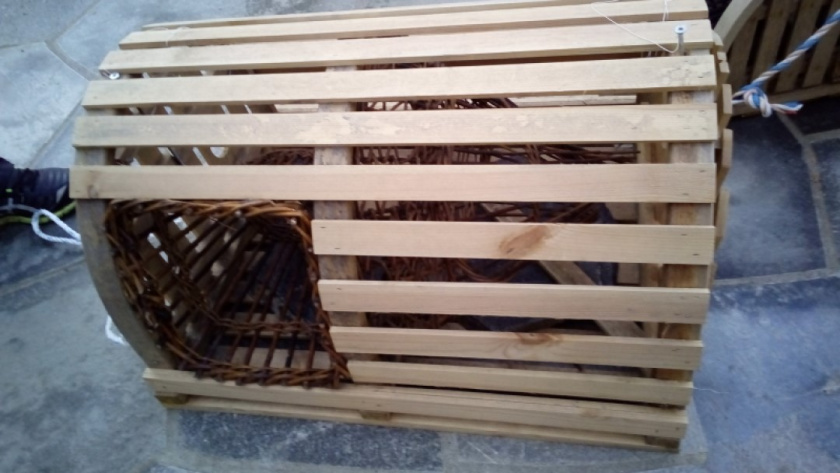
But it is a wooden contraption that catches my eye. Tord sees me looking at it and takes a moment to show me his home-made wooden lobster pot. This is how lobster pots used to look before cheaper alternatives made from metal and plastic replaced them. The wooden pot is a thing of beauty. If it gets lost, it will break apart in sea water within a year or two.
It strikes me how varied the solutions to ghost gear can be. State-of-the-art ROV’s and vintage style wooden lobster pots are two ways of solving the same problem. Both ways born of a will to actually do something about the problem. Perhaps it is the hour or the beautiful surrounds that are making me sentimental but I am reminded of Margaret Mead’s famous quote:
Never doubt that a small group of thoughtful, committed citizens can change the world; indeed, it’s the only thing that ever has.
To read more about the Green Bay Project please visit their Facebook page: https://www.facebook.com/RentReservat/