

KIMO was formed in 1990 by four municipalities who saw the multiple environmental threats facing coastal communities. They realised early on that marine pollution respects no boundaries. Radiation from nuclear power plants in the UK can show up in mussels in Norway. Fisherman from the Netherlands could be harmed by historical munitions dumped in the Irish Sea. Plastic shotgun cartridges from Danish hunters can be carried by the currents and end up on beaches in Sweden. All of these problems require joined up thinking and communal action.
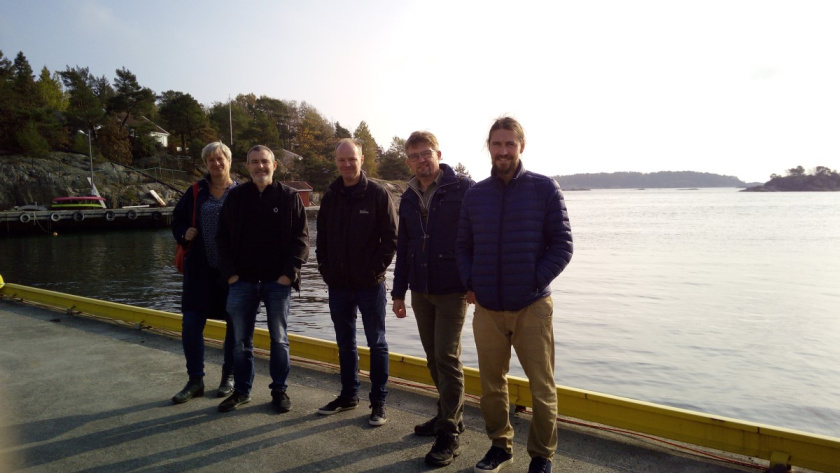
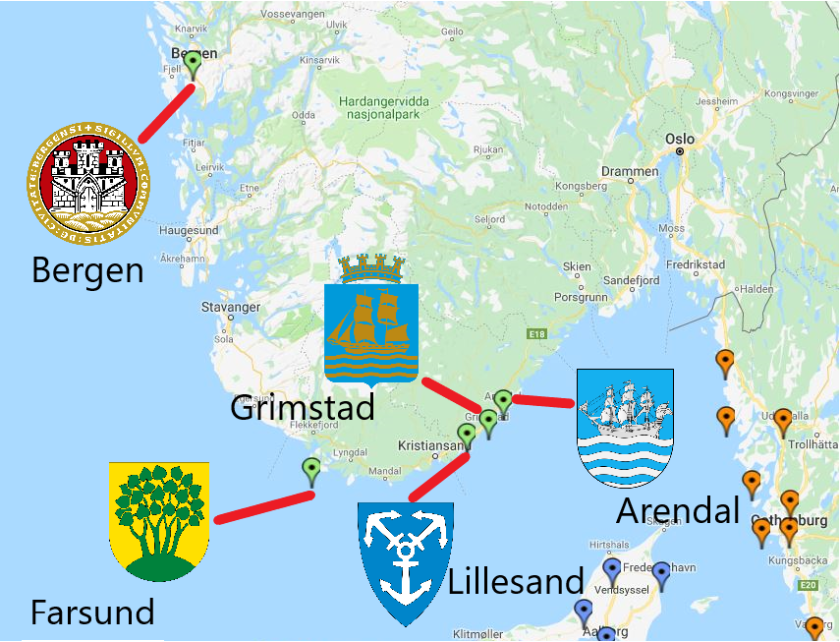
Which is why the news that 5 municipalities in Norway have decided to join KIMO is such good news. In fact, Norway has been in KIMO’s DNA from the start with the Norwegian municipality Vågsøy having been one of our organisation’s founder members. In order to introduce our new members to the rest of the network, we caught up with Ragnhild Hammer (Arendal), Håvard Bjordal (Bergen), Arnt Abrahamsen (Farsund), Karl Christian Langevoll (Grimstad) and Preben Værholm (Lillesand).
What are the environmental challenges facing your municipality?
 Bergen city faces the same challenges as most other harbour cities: pollution in the sea sediments, during cold periods in winter we also get air pollution. Hence we taking part in a programme of “green change” and want to reduce the number of private cars. Already 20% of cars are driven by electricity, and 70% of new cars being sold are electric cars.
Because the ocean and the sea are of great importance to us, Bergen has always had a strong focus on the marine environment. Our action plan against plastic and marine pollution is a local solution to a global problem.
As Farsund municipality is close to the North Sea and situated at the crossing of the Gulf stream and Kattegat stream we are severely affected by all kinds of marine pollution. Some of it comes from human activities such as shipping and industry, often due to a lack of awareness. Natural forces such as storms also carry marine litter to our shores.
Grimstad municipality is currently having some issues with marine litter. Otherwise we are focusing on reducing our greenhouse gas emissions by implementing a variety of plans. There are also some species in this region we have to take care of, and protect by protecting habitat.

Lillesand kommune has a long coastline with lots of small islands and therefore we have challenges with marine pollution including waste, plastic and lost fishing equipment (nets, pots etc). We have sulphide-containing rocks all across our municipality which is toxic for the environment if not handled correctly. Unfortunately when blasting the rocks for a large development in the 1980s a lake got contaminated and there is still almost no life in it. We also have air pollution from local industry.
 Arendal was the first Norwegian municipality with a climate neutral administration. Since 2008, and with a unanimous City Council decision, we have made plans to reduce our carbon footprint. The goal was to reduce the emissions from the administration with 90% by 2017. In 2018 we have reached 80 %.
The largest source of emissions is from transport. Our Climate Action Plan is for all sectors of Arendal society and the goal is to be a 1.5 degree city by 2030. We have to reduce the need for transport, and also the emissions from transport. Transport is both a climate issue, but also an environmental issue. The micro plastic produced by cars is a major source for pollution. Transport is therefore an environmental challenge.
Why did you decide to join KIMO?
Because of concerns about marine pollution and also because we are a coastal city, we decided to join KIMO to get increased knowledge of the marine environment, to exchange knowledge and to learn from other municipalities in Norway and other members of KIMO.
As a part of the North Sea area it’s important that many municipalities and countries work together with a common challenge and exchange their experience in a common way. KIMO seemed to be an arena for this, and therefore we decided to be a part of this organisation.
Arendal have been working to protect our marine environment for many years. Our coastal service has done a great job collecting litter. Since 2013 we have had a “Clean the Beach-campaign” for five of our schools. The establishing of the Marine “Raet National Park” in 2017 has increased the attention on marine environment. Together with KIMO, Arendal will strengthen the important work and join forces with the network in other countries.
Bergen used to be a member of KIMO some 20 odd years ago – and at that time we shared the same awareness about the risks posed by radioactive waste and pollution of the ocean as other countries around the North Sea. This subject is still our concern, but plastic and marine pollution is the most important reason for once again joining an international network such as KIMO.
We found it advantageous and smart to be part of an organization with great knowledge on environmental challenges, marine litter etc. Grimstad wants to be part of the solution and help fight common environmental challenges.
Please tell us about some of the good work already being done for the marine environment in your municipality?
Farsund Municipality has already started and will continue with different activities. Activities such as cleaning our coastal areas and beaches, activities for young people/schools (Hav monster, Blue Flag, Green flag etc.) We also have had a activity – Kystlotteriet, where people gets the possibility to involve their family and friends to clean/pick up pollution for the best of the marine environment.
And we also intend to start some new activities in 2019.
“Action Clean the Beach” school program, with a lecture first, and then going out to clean a beach.
“Våre Strender” – Our Beaches – a program for voluntarily cleaning a beach. Organisations, businesses, families – everybody can adopt a beach and keep it clean.
Cleaning 3 contaminated seabeds, as Arendal is one of the 17 most contaminated seedbeds in Norway. This is due to old industry.
We are making plans in our Municipality to reduce climate change. Working for reducing our greenhouse gases by 40%.
We have also joined Våre Strender and Kystlotteriet, in this partnership we are giving opportunities so people can clean up land and the sea for marine litter. Local teams, local organization and people can get grants by cleaning up large areas with marine litter.
So we are having focus on being better and make the nature more beautiful by reducing marine litter. Also some parts of Grimstad is a part of Raet Nasjonalpark (Nationalpark), so we are in interests of keeping the coastline as tidy and nice as we can.
In the summer voluntary organizations have ‘fish/dive for litter’ days. Some professional organisations use ROVs to collect fishing equipment and take a survey of the ocean bottom.
The municipality offers to pick up waste that is collected from people on the islands. So if you are picking up garbage when you are taking a Sunday trip along the coast, you can send a message to our “archipelago service” and they will pick it up when they have time.
We also have a recycling center where you can deliver garbage for free.
Bergen has created a Green Strategy to progress our environmental work. Our action plan against plastic and marine pollution includes a wide range of projects, education, awareness programs etc. and we are busy following up on all of these. Our plan is well known in the Bergen region as well at national level and has been translated into English because we want to share our efforts with other countries.
A warm KIMO welcome
From all of us at KIMO, we welcome our new members from Norway and look forward to working together with you to make our common seas truly healthy and sustainable.
A final word of thanks to…
all our friends and colleagues in Norway who helped us to expand the KIMO network into Norway – we appreciate your help and support. Thank-you also to all who attended the information meeting in Lillesand. Thanks to GRID Arendal, The Institute of Marine Research at Flødevigen and Bergstø kindergarten for showing us some of the impressive work already being done to protect the marine environment in Norway. Special mentions to:
Jan Kløvstad for raising awareness about KIMO in Norway; Arne Thomassen, mayor of Lillesand for hosting the information meeting in Lillesand; Jan Olav Strand, Tore Askildsen, Sally Vennesland, Nils Harald Rennestraum and Beate Marie Johnsen for their kind endorsement. Most of all, an enormous thank-you to Lars Holmer Hoven and Berit Weiby Gregersen for going above and beyond the call of duty to organise the events in Agder and making the (re)birth of KIMO Norway possible.