


 Guest Editorial by Dr Richard J. Lilley
 Guest Editorial by Dr Richard J. Lilley
Dr Lilley is a founding director of Project Seagrass. His research focuses on the sustainable supply chain management of small-scale capture fisheries. He is particularly interested in the role of seagrass meadows in providing local food security. Dr Lilley has over seven years experience of research in marine systems and has primarily worked in the Caribbean and Mediterranean Seas. He is a qualified PADI and BSAC scuba-diving instructor and recreational free diver.
Seagrass is probably the most threatened ecosystem you’ve never heard of, but don’t beat yourself up about it, you’re not alone. Seagrass meadows have long been a marginalised ecosystem. Indeed, despite numerous scientific studies showing them to be a veritable marine powerhouse, they are still not on the world’s conservation agenda.
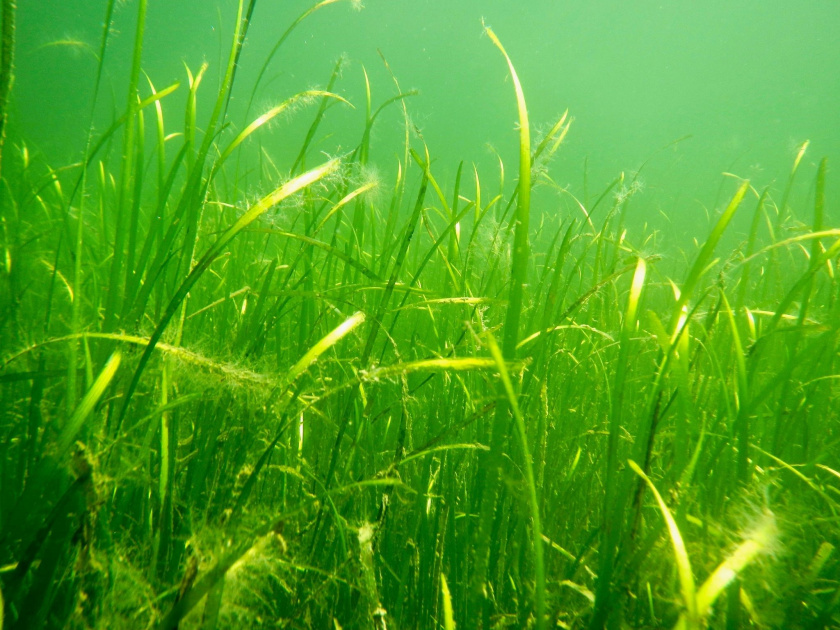
For several years now my ‘elevator pitch’ for seagrass has been based around three topics;
1. Fisheries and Food Security
For thousands of people around the world seagrass provides them with food security and a livelihood. This is as a result of the nursery area that seagrasses provide to commercial fish when they are juveniles. Arguably, one of the most important roles of seagrass is providing a nursery and shelter area for a number of commercially and recreationally important species. Seagrasses provide juvenile fish with shelter, protection from predators and increased food availability. This is a very simple message, less baby fish = less adult fish, or more seagrass = more fish!
2. Blue Carbon
According to the UN’s Intergovernmental Panel on Climate Change, urgent and unprecedented changes are needed to avoid a climate change catastrophe. Although in some sectors efforts are already being made to reduce the production of greenhouse gasses, the general consensus is that they are not enough. It is therefore critical that we find ways to drastically reduce the amount of carbon in the atmosphere. Ecosystems capable of absorbing and storing large amounts of carbon dioxide (think seagrass!) are known as “carbon sinks”. “Blue carbon” relates specifically to the carbon that is stored naturally by marine and coastal ecosystems, hence the name. Three types of coastal ecosystems — mangroves, seagrasses and tidal marshes — store half the “blue” carbon buried beneath the ocean floor.
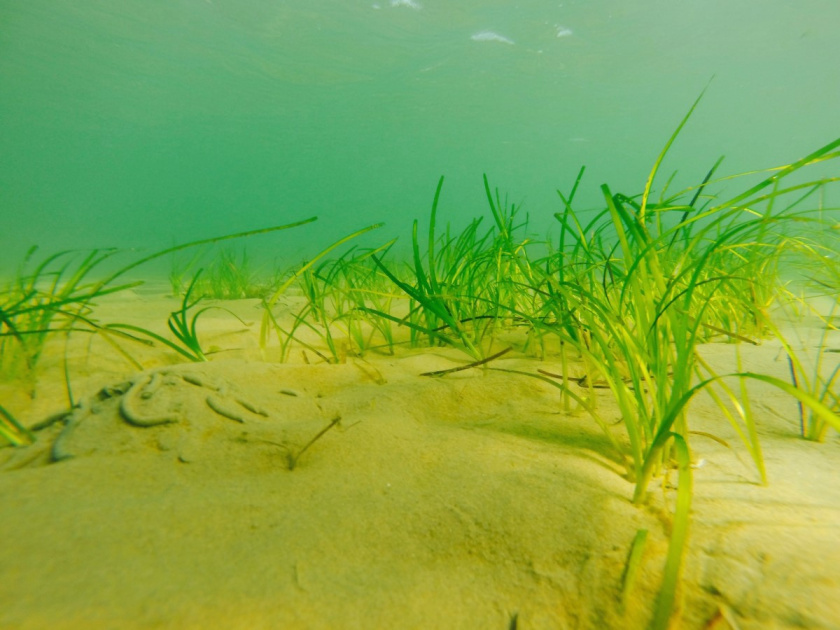
‘Blue carbon’ sinks store just as much carbon as forests on land and accumulate at a much faster rate. Larger marine forests store more carbon. For this reason, the extensive coastlines of Northern Europe, which are dominated by eelgrass meadows in soft-sediment areas form important carbon sinks. But still we do not know their magnitude. This is also a simple message, seagrass fights climate change!
3. Green Barriers
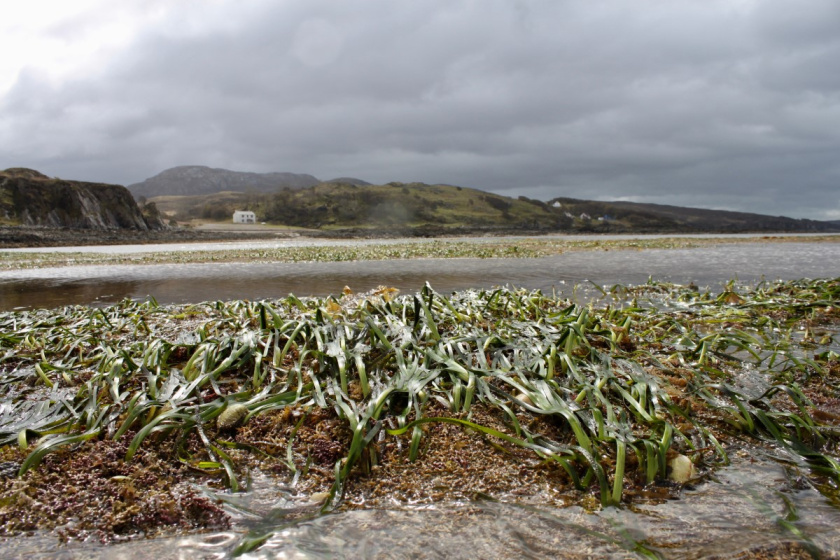
Seagrass meadows protect our coastlines from wave energy, so are very useful in absorbing and dissipating energy during extreme weather events. What’s more, seagrasses provide further protection by trapping particles and building up sediment at the seafloor, which are then stabilised by their underground structures of roots and rhizomes. The formation of such blue carbon sediments gradually elevates the seafloor, thereby counteracting sea level rise. So, the final pitch is that seagrass meadows help protect coastal communities from storms. [Particularly relevant for KIMO members!]
Enter Project Seagrass
This all sound great, but what can you do? Well you can learn more about the seagrass meadows in your area and you can support our work at Project Seagrass.
Project Seagrass is an environmental charity currently based in Cardiff, Wales and Edinburgh, Scotland. We are also in the process of setting up a presence in Stockholm, Sweden. As a team of passionate seagrass scientists, we are dedicated to the conservation of seagrass ecosystems through education, influence, research and action.
Our four key principles define how we act. As such, we’re passionate about:
- educating the wider community on the presence and importance of seagrass ecosystems, the services they provide and current seagrass management issues,
- building the capacity of local stakeholders in the use of standardised scientific methodologies,
- promoting and assisting with long-term monitoring of seagrass condition,
- assisting with scientific research and supporting conservation measures that help facilitate the long-term resilience of seagrass ecosystems.
Project Seagrass was created with the approach of turning cutting-edge research into effective conservation action and education schemes, by collaborating with local communities and other stakeholders. As a dedicated team of seagrass scientists, we work to protect seagrass, and through seagrass, we support marine conservation more broadly. Conserving our current meadows (and restoring degraded meadows) makes good economic sense and at Project Seagrass we believe that practical and physical tools are vital to better understand seagrasses, so that together, we can protect them. Our most recent contribution is our Citizen Science app and database – SeagrassSpotter.org.
 Get involved
With SeagrassSpotter, ocean enthusiasts around the world can become citizen scientists who contribute to marine conservation with just a few taps of their phone. We’ve made some important scientific breakthroughs with seagrass in recent years, but they remain incredibly threatened and are still under-appreciated globally.
The more data we can get recorded, the better these important ecosystems can be managed, but without the data, we have nothing to work with. Only since we have had data to support our cause have we been given the go ahead to begin larger scale restoration projects.
So, if you want to protect your patch, then please get out there and start spotting seagrass!